Showing posts with label design. Show all posts

Thursday, 27 October 2022

Last Hurrah

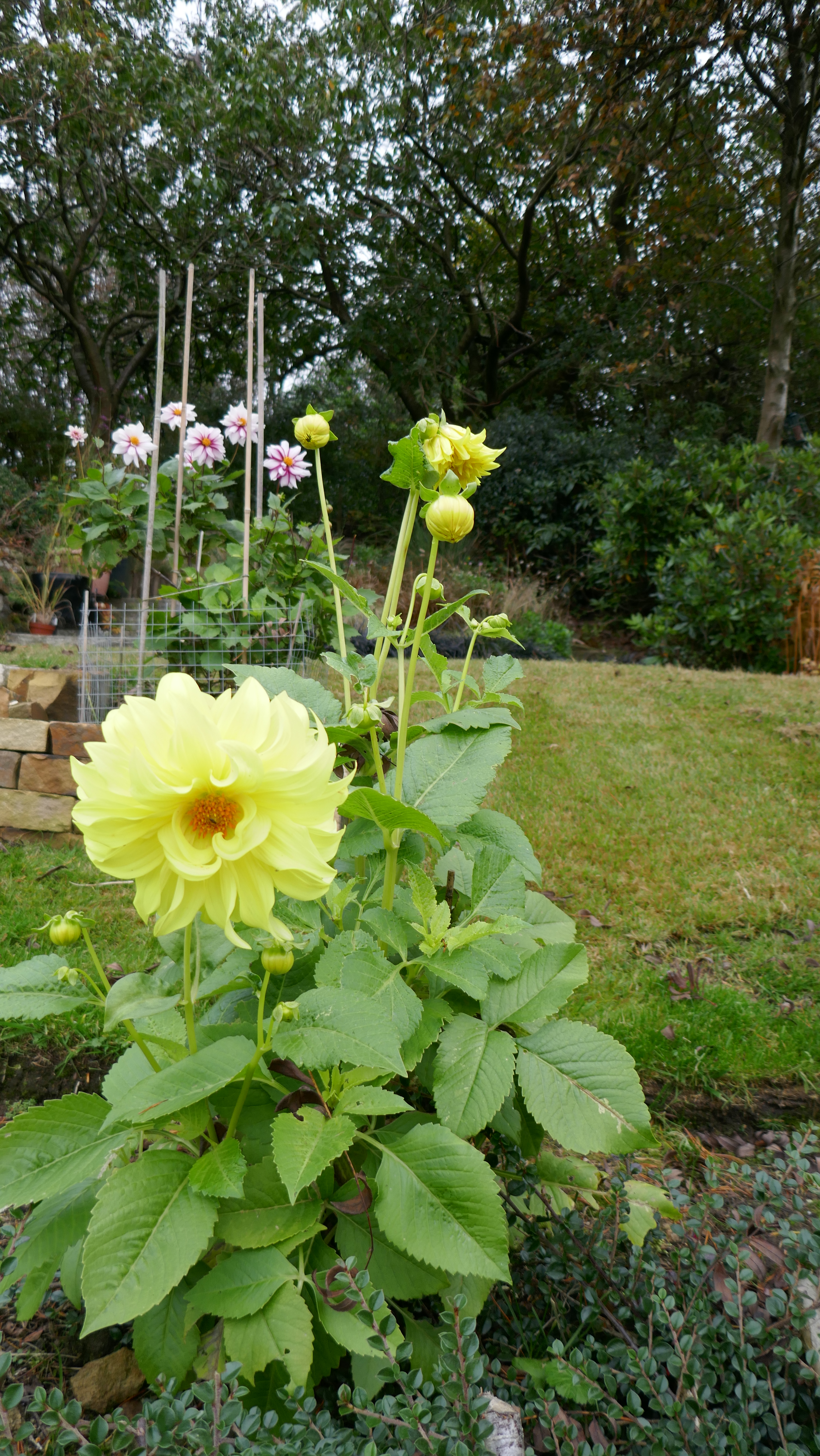
The garden is still looking surprisingly good, given that we are now deep into the autumn. The yellow, oranges and reds are still emerging and, at the same time, there are still some remnants of the summer. The patio tubs and wall baskets are still hanging on. I would certainly recommend cosmos and dahlias for extending the season. It is the traditional time for bringing in the tender plants, in particular I will have to find room for about a dozen agapanthus. The conservatory has been cleaned out to make space for the less hardy plants, but given the nice weather, I am reluctant to do anything prematurely, which might detract from the appearance of the beds.


Of course there are the autumnal gems emerging for their turn in the spotlight and the cyclamen hederifolium are looking particularly nice with the back drop of the heuchera, green spice.

Even the patio still has some interest and I was surprised to see how well it looks after dark. The light shade of render helps to bounce the light around and illuminate the tubs that still have quite a bit to offer.

Evening temperatures (and daytime) have been unusually mild, so my top tip is never be surprised and expect the unexpected, to paraphrase Oscar Wilde.


Wednesday, 4 May 2022

A Canopy of Blossom

We are very lucky having enough room in the garden for a small selectin of trees. At this time of the year their beauty is pronounced by the lovely blossoms, none better than on the cherry trees which mark the top boundary.


The canopy of the leaves makes for a very different feeling to the top level of the garden and the varying levels of shade present a whole variety of alternative planting opportunities. The border beneath the cherries is currently home to a hedge of predominantly, hawthorn and, beneath this a selection of low ground cover. The latter will be reviewed this year as it becomes invisible behind the beds of grasses in front of them, which is a pity. Consequently, I have already put two clumps of Solomon's Seal (lifted and divided from elsewhere in the garden). This is a taller plant and hopefully its white flowers will stand out in the shade during the early part of the summer.

The Rowen tree presents a similar planting challenge but because the beds beneath it are south facing they do  receive that bit more sunlight. Also being beside the upper bench, lower, ground cover plants are much more readily visible. 

In fact this section of the garden has proven attractive to plenty of self seeders, the forget me nots and honesty being very welcome. Providing that such plants do not become overly dominant they are a perfect example of "right plant right place", as they have chosen the site for themselves.

Top tip: if rogue plants and flowers find their way into your planting scheme do not be too hasty to discard them, many are very attractive and, of course, a bonus for the frugal gardener. You can also consider digging them out and moving them to another spot in the garden.


Of course, the dappled shade also attracts other life forms into this part of the garden, particularly when the bench seat cushions have been put out for the season. Mili knows how to make herself comfortable!


Thursday, 23 December 2021

Dark Skies, Mists, Snow and Winter Structure.


The winter structure in any garden is such an underestimated element. My own theory is that because we venture outside less in the dark months we have lesser expectations of our outdoor spaces. Of course, it might be less appealing to use our gardens for sitting and relaxing in mid December but the occasional brew on a garden bench or a little gentle tidying up can be just the tonic for a gloomy day. The garden can also be viewed from indoors by many of us, even if it is just from the kitchen window. 

Therefore to add that all important interest and the psychologically important elements of green then structural plants are a bonus, if not essential. Heathers, brooms, ivy and our Scots  pine are just a few of the green items that can be found in our Pennine garden. While non of these might be enough to entice us go outdoors and wonder at their individual beauty, together they can paint a pleasing vista to gladden any heart.

My top tips to help with a winter garden include 
~ take heed of the shadows and light levels that the low winter sun gives. They present an opportunity to give the garden a very different seasonal ambience, particularly if you are lucky enough to have some low level backlighting through some of your plants or even fading stems. For us this is best in the morning when the sun is in the East
~ try to have some structural elements across the garden, it will encourage the eye to link different spaces together, reinforcing the underlying sense of movement and interest.
~ utilize contrasting textures in your planting as well as as your hard landscaping.
~ remember the views, with no leaves on the trees, new vistas are opened up and might be enjoyed even more if seating can be rearranged

Below, recent December conditions and a contemplative Hecate stares through the mists. By contrast a less than happy Mili, who likes to follow me outside come what may, even into the snow.... then I get the blame for wet paws!


Tuesday, 28 September 2021

Chelsea Take Note

It is now a few days since the close of the Chelsea Flower Show 2021 and I must say how much I have enjoyed the BBC coverage. I am also of the opinion that having the "most prestigious flower show in the world" at a completely different time of the year has been most refreshing. The palate of flowers and plants has been different and it has compelled the designers and exhibitors to move out of their comfort zones and think a little bit more about how to accommodate the challenges of an autumn palette. These are considerations which every "real" gardener has to contend with on an annual basis. It is part of the fun that keeps us on our toes. 

Consequently, I have little sympathy for the designers who have ducked the challenge of the autumn Chelsea. It was a pity that there were the fewer main show gardens than there has been for many years. However, the gardens that did make it were a triumph, well done to each and everyone. I have spoken with numerous other fellow gardeners and we are of the unanimous opinion that a Chelsea in autumn must be repeated, maybe once every ten years? I am aware that this may not fit in with the annual social calendar of the London set but visitor numbers did appear healthy all the same?

Late summer and autumn interest are not difficult to achieve. For instance our pastel beds are now a little faded but still with plenty of interest and structure, thanks in no small part to the different shades of cosmos and the sea holly.

Top Tip 1: planning for year round interest is a challenge but if selected beds are devoted to different seasons it does make the task easier. The alternative is going for a much more trickier succession of plants that will flower in the seasons all  in the same area. Our Pennine garden was always intended to peak in mid summer, to coincide with the school summer holiday. However, since retirement season round interest has been much more important.

Top Tip 2: when planning year round interest, think carefully which parts of the garden you are most likely to be using/ sitting in at the different times of the year.  

A simple use of grasses are an easy way to extend some seasonal interest and when backlight by the sun are delightful, while pots which can be shifted around (as we do on our patio) are a fool proof way of ensuring the most floriferous plants are in prime position.


Wednesday, 28 July 2021

Water is for Relaxing Around

A recent running theme in the blog has been the art of relaxation. I have made reference to how difficult it can be when you know that there are jobs you can usefully be getting along with, or better still, ticking off your list. By contrast our feline friends have the knack of making idleness seem effortless. At this time of the year it is the shady spots which are most favoured for the restful moments and when the garden umbrellas are shifted around on an hourly basis for the maximum comfort levels.

The shady spots will change with course of the day. It is critical that the gardener understands his aspect and how many hours of direct sunshine each part of the garden will get each day. This will also change with the seasons and the planting schemes really must take this into account. There is very little point trying to grow sun loving plants in deep shade and it is equally fruitless planting your woodlanders out in the open.

Top tip: before making an expensive mistake and investing in serious plant purchases make sure you understand the aspect of your garden, it is as important as knowing your soil type and depth.

It is for this reason that the planting around the lower pond, in the shade of the neighbours property (for much of the afternoon) has been restricted. The theme is mostly foliage but this does not preclude some splashes of colour and I particularly like the muted deep reds and pinks at the far end of the pond. The photographs show how the petunia (Tidal Wave Red Velour) and the astilbes work well together and give a nice lift to the far border.


The colour scheme at the pond end of the patio is muted and restful. The bench by the pond is one of the most popular spots in the garden and with the calming sound of the moving water it can be quite blissful. But a glance to the left will reveal the multi coloured containers and dazzle of the summer pots. These take advantage of increased light levels, which might only be a couple of extra hours per day in summer but it does make a difference. 

The water lily just gets enough daylight hours


Bench and conservatory door can be seen on the right


Light and shade

Friday, 30 April 2021

Spring Foliage

Foliage is an element in the garden which should never be underestimated. Colour is undoubtedly eye catching but is frequently ephemeral and sometimes elusive. A fickle spell of weather can scupper the best planned flower schemes. However, foliage is far more often, reliable, longer lasting and with an infinite variety.

The little raised bed by the upper bench is dominated by the laburnum tree but it is underplanted with an eclectic mix of shade loving plants. Admittedly, there are some primroses in bloom but for me the star of the show has to be the contrasting leaf shapes, sizes and hues. What I also appreciate is the different leaf textures. Rough, waxy, hairy, ridged, smooth they can also be very tactile. They do coincidentally, at least in the Pennine garden, provide a convenient feline hiding place where a watchful eye can be kept for neighbouring bandits looking to invade their territory!

A garden designed with foliage as a first principle will prove to be a less fickle mistress and virtually guaranteed to deliver. 
Top tip: when designing or replanting a patch of your garden think about the impact the foliage can have, either the stand alone effect of the plant leaves or the intriguing combinations which can be created.

Heuchera Green Spice


Monday, 4 January 2021

Review of 2020

This year has been the strangest of my lifetime. The global pandemic has devastated lives, businesses and everybody's sense of security and well being. Consequently, it is a somewhat of an irony that our gardens have been one of the few beneficiaries. Many gardens have been afforded extra love and attention, perhaps because going out to work has been curtailed or perhaps because going on holiday has been impossible or perhaps just because the garden has offered a safe haven away from the media's endless stream of depressing news.

This time of the year is a good moment to take stock and reflect on the successes and failures of the past 12 months. In a horticultural sense our Pennine garden has had its usual highs and lows. I always think it is important to be realistic about your assessment of what has worked and what has not turned out as planned. It can be tempting to keep repeating the same mistakes, blaming extraneous circumstances for any failures, usually the weather. But a top tip for gardeners of all ages and experience is carry out an honest review. Even if you change very little in your plot remember the climate is gradually shifting, new pests and diseases are arriving and your garden will age and evolve, like the rest of us, even with what we might perceive to be minimal change on our parts.

The 2020 successes for us were

~ best new plant: the petunia Tidal Wave Red Velour, that have been shown in early 2019, kept indoors, but taken outside onto the patio in spring 2020. They flowered prolifically and for a at least 4 months. Needless to say more were sown and are hopefully growing away in the conservatory as we speak.


~ best revamped patch: the part of the north beds, above the new Himalayan cherry tree, which have been planted for a blue and orange colour scheme. Although other colours have intruded, it has looked really spectacular but is still a work in progress.


~ best wildlife: just has to be the newt in the upper pond. What a joy to see this seemingly primeval amphibian finding a home in our garden.


~ best project: probably the planting pockets by the final section of the steps. I had intended to put some statement grasses here to define the entry into the top section. But a last minute decision to put the dahlias in has turned out to be a very happy accident. The steps can, sadly, draw the eye, so to have some colourful and long lasting dahlias here has been a real bonus.


The 2020 failures

~ the wall baskets on the patio; with garden centres being closed in the spring the plan was to grow from seed and small mail order plugs, the flowers that we would need. The plants did grow but not all at the required rate. I thought when planted up they would still flourish into the usual splashes of colour which disguise the wall of the house. But they were disappointing. In particular, the basket with trailing nasturtiums was rather feeble (fortunately the tub of nasturtiums higher up the garden did much better). 

So the lesson to be learnt for 2021, providing the garden centres are open, take an enjoyable trip out and choose the plants for the basket that in "blooming" good health. Sometimes a bit of spontaneity in the choosing can be so much fun, perhaps that is because spontaneity is the antithesis of most of what we do in the garden.

Here's keeping fingers crossed and all the very best to everyone, wherever you may be in the world.

Aside: the blogger data repeatedly shows a large number of visitors from Sweden. It would be so nice to hear from you if you would like to add a comment. Perhaps I can add a little more of the content which is most of interest to Scandinavian readers, either way, gott nytt Ã¥r.


Tuesday, 6 October 2020

Pots for Winter Interest

In a recent post I revisited the idea of putting together our bulb lasagnes. In a similar vein my better half decided that it would be a nice idea to have some winter interest, in the form of two winter pots. Placed on the patio near to the kitchen door she has composed two linked displays that should look just right all the way through to next spring.


The pots are packed with evergreens, they have plants with different shapes and form and only one specimen is duplicated, the red hook sedge. But the red hook sedge and the fact the pots themselves are matched serves to unify the two displays into a coherent and interesting splash of colour.

Top tip: when planning little displays such as these winter pots consider how you might be able to use the plants afterwards. For instance, if you use a dwarf conifer (as shown in the pot on the left) think about where it will be relocated to when the tub is emptied out in spring. I have a little space in the heather beds earmarked for this fine specimen.

Alternatively,

Top tip: to keep the costs of winter tubs down you might consider utilizing plants that you already have in the garden, not surprisingly, the grasses where taken from seedlings that had just self seeded and the red cyclamens is a survivor from previous years.


Wednesday, 23 September 2020

Roses in Autumn

The grass borders can always be relied upon to look good at this time of the year. The fact that at least half the varieties in our bed are technically sedges and therefore mostly evergreen ensures that this will be the case. But full on prairie planting (which is not dissimilar) is renowned for looking at its best late on in the year. 


Fortunately, this year the summer colours are lingering on and the roses are still very much in bloom with plenty of new buds. The photographs below were all taken in the past few days.
Top tip: if you are limited for space and can only have one or two rose bushes then consider going for a repeat bloomer.


Hecate and Mili explore the grass border


Wednesday, 19 August 2020

Little Details


The details of a garden are critical to the bigger picture. The pond shown above needs a sympathetic surround of apparently overgrown walling with hidden architectural detail, where as the orange crocosmia seems so much more vibrant with the background of the weeping copper beech. While some of these finer points are simply happy accidents, others have been deliberately engineered but with the hope that they look quite naturalistic.

When combined the effect can be quite pleasing to the eye, hopefully without being too obvious. The bigger picture of the ornamental grasses hopefully gives this impression.

Top tip: when visiting other gardens take a little time to study the more intricate points, take photographs of the finer details and try to look beyond the bigger picture.


Of course, Hecate likes to be part of the bigger picture too!


Monday, 27 July 2020

The Pastel Bed

It struck me recently how much a garden will evolve without any help from the people who might tend it. I was weeding in and around the pastel bed and realized how it was losing some of its intended lighter shades of colour. This year the gaura "Sparkle White" has yet to show, the lavatera "Barnsley Baby"is well behind and the gypsophila did not survive the winter, meaning the predominant colours are shades of purple and blue.

The achillea cassis, the eryngium, alliums and the astilbe do a good job but it is not quite how it looked last year. I suspect the achillea (yarrow) is out competing some of the other plants so I will be careful to gently redress the balance in the future.

However, I will still enjoy the display and be thankful that the astilbe is the white variety (quite appropriate as its English name is the evocative "false goat's beard" 

Elsewhere in the garden the evolution is more orderly and the beds around the new cherry tree are filling out nicely. Hopefully they will do well into the autumn when they can die back gracefully to leave the bronze bark to illuminate the quiet late autumn and winter .

Top tip: at the design stage, think how a border will look throughout the year and consider what will give a succession of seasonal interest. Small shrubs are often the most straight forward way of achieving this, they can have form to provide structure, many are evergreen to provide some hint of life and others have the most beautiful stems, such as the dogwood which has a multitude of colours depending on your chosen variety.


Thursday, 23 April 2020

Bringing the outside in and taking the inside out!

Agapanthus needs to be acclimatized
This is the time of the year when the plants in the conservatory have to be taken outside on a daily basis for hardening off. When dusk approaches they are brought back inside. I keep an eye on the Met Office weather forecasts and if it is likely to be a mild night then the plants may be left outside. But more often than not they are brought back into the safety of the conservatory.

The conservatory is also a space for relaxing and by the beginning of May the notion of bringing the outside in becomes more important. This essentially involves trying to make a natural transition between the greenery of the conservatory house plants and the vegetation of the patio and pond.


Inside meets outside
Lilium Queen of the Night
 
It is now rather dated to want a neat border between home and garden, apparently the latest dreadful buzzword in home design is “transterior” – where there’s an utterly seamless segue from one to the other.

The ideal is a much more symbiotic outcome, where buildings are more sympathetic to the landscape outside, and vice versa. Twenty years ago, the must have was the ‘outdoor room’. Today the indoor and outdoor are being designed merge, with elements of greenery joining the spaces with more natural materials  inside, and the architecture flowing outside.

Top tip: while most of us cannot easily redesign the architecture of our homes, we can bring the outside in with the judicial placement of seasonal pots by the front, back and conservatory doors. A simple illusion of bringing the garden closer to the indoors. Combined with a plant pot on the windowsill enables the "bringing of the outside in and the inside out."

Sunday, 1 December 2019

With Pointed Leaves

Yesterday, as is my usual habit on a Saturday morning, I read Nigel Colborn's gardening column in the Daily Mail. He wrote an interesting piece on hollies in our gardens. This prompted me to think about how the Ilex aquifolium, meaning with pointed leaves has a really undervalued role in our Pennine garden. It can clearly tolerate a variety of planting locations and as such it has served a range of understated but very useful functions.

The specimen to the left forms part of the boundary between ourselves and the neighbours. It is currently adorned with the bright red berries that are synonymous with the holly and which are much appreciated by the bird and animal life in the garden. Of course, both male and female plants are required if the tree is to produce its berries.

At the front of the house the hollies serve to mask the rather functional and not to pretty brick steps. They are particularly valuable because their evergreen nature distracts the eye somewhat from what is now rapidly becoming a rather bare looking cotoneaster plant. The evergreen characteristic is the reason why the pre Christians are thought to have believed that bringing inside boughs of the holly tree would ensure a return of Spring after the winter. It is connected to the integral magical powers that allowed the holly to retain its leaves. Of course, like many pagan traditions it has since been incorporated into Christian beliefs so that the berries are now symbolic of the blood of Christ and the sharp points (of many but not all hollies) represents the crown of thorns.

Elsewhere the hollies serve to give that all important winter structure, such as as backdrop for the ornamental grasses. As you can see they are in need of a trim not least because the holly is actually a tree and will keep growing if not kept pruned. However, this is not a major task  because most hollies grow at only a modest rate, but my top tip would be to plant with a medium to long term view and get a decent pair of gardening gloves.

Pliny the Elder (AD 23-79) had some advice about the best spot to plant,  in  “Historia naturalis”, an encyclopedic study of plants and animal life, he noted that if Holly is planted near a house or farm, it would repell poison and defended it from lightning and witchcraft. You might want to bare this in mind as well.


The hollies we have at the front have lovely variegated leaves. These are particularly nice, as when using the steps, at the front or side of the house, you are certain to get a good close up view of these lovely and underrated garden plants. 

I am often guilty of giving too much time and attention to my garden specimens that are either "flashy" or rather tricky to grow. But Nigel Colborn has reminded me not to take the plants that do well, without much fuss, for granted.


Friday, 27 September 2019

Cawdor

Holidays in the UK have so much to recommend them. This country has such a diverse range of scenery, culture and history, that it would be impossible for anyone to ever say they were familiar with Britain. As a keen gardener and golfer we have been drawn to many of the less travelled parts of the country. Earlier this month we were in the North East of Scotland in what I had imagined to be a little off the beaten track. However, the lure of some brilliant golf, some special scenery, the whiskey trail, not to mention the history and hospitality meant that even into autumn there were full hotels and plenty of visitors.


The Moray coastline is quite spectacular but it is the gardens at Cawdor Castle which I have featured below. The award winning grounds are most definitely worth a detour. Dating back to the Renaissance, it is not surprising that The Walled Garden is the oldest garden at Cawdor Castle and probably the highlight.


 The family archives indicate the presence of orchards on the site of the current Walled Garden. Developed over the years and with the addition of a host of exotic seeds in the late seventeenth century. The Walled Garden naturally developed into one of the finest Victorian Gardens of its kind. Due to increasing number of visitors to the Castle, and with many of them helping themselves to the gardens treasures, it was eventually closed to the public.

Remodeled in 1981 by Lord Cawdor and incorporating over 1200 holly plants, the top half of the Walled Garden was developed into a maze. Taking inspiration from the mosaic floor of the ruined Roman villa of Conimbriga in Portugal. In classical form depicts the Minotaurs Labyrinth in Knossos in Crete.

In addition, some years later in 2015 American born sculptor Gregory Ryan created the Minotaur that stands visibly and proudly in the middle of the Cawdor labyrinth.

Surrounding the maze on three sides is the Laburnum arch offering a waterfall of yellow flowers from late May until June.