This year has been the strangest of my lifetime. The global pandemic has devastated lives, businesses and everybody's sense of security and well being. Consequently, it is a somewhat of an irony that our gardens have been one of the few beneficiaries. Many gardens have been afforded extra love and attention, perhaps because going out to work has been curtailed or perhaps because going on holiday has been impossible or perhaps just because the garden has offered a safe haven away from the media's endless stream of depressing news.
This time of the year is a good moment to take stock and reflect on the successes and failures of the past 12 months. In a horticultural sense our Pennine garden has had its usual highs and lows. I always think it is important to be realistic about your assessment of what has worked and what has not turned out as planned. It can be tempting to keep repeating the same mistakes, blaming extraneous circumstances for any failures, usually the weather. But a top tip for gardeners of all ages and experience is carry out an honest review. Even if you change very little in your plot remember the climate is gradually shifting, new pests and diseases are arriving and your garden will age and evolve, like the rest of us, even with what we might perceive to be minimal change on our parts.
The 2020 successes for us were
 ~ best new plant: the petunia Tidal Wave Red Velour, that have been shown in early 2019, kept indoors, but taken outside onto the patio in spring 2020. They flowered prolifically and for a at least 4 months. Needless to say more were sown and are hopefully growing away in the conservatory as we speak.


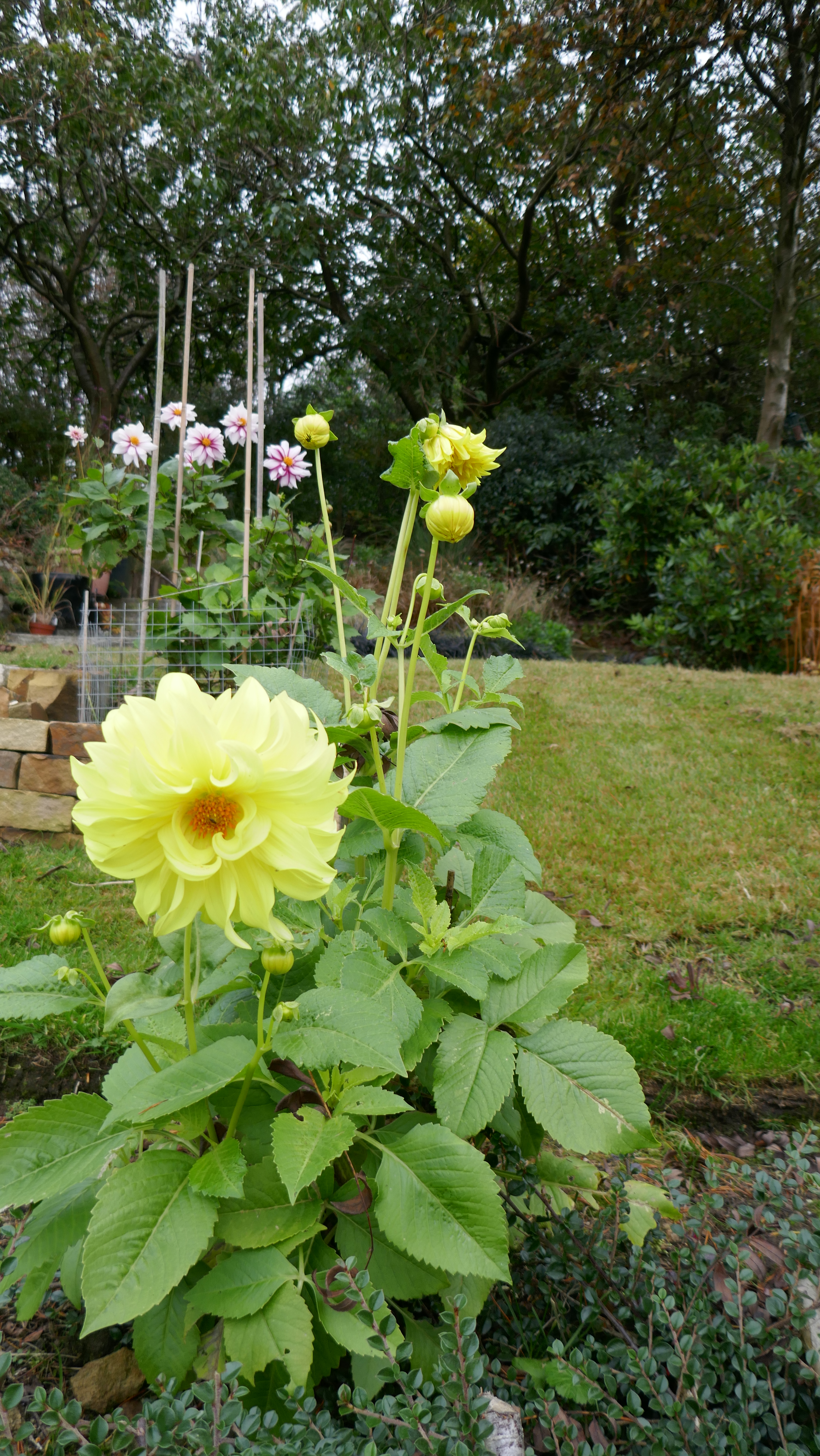 ~ best project: probably the planting pockets by the final section of the steps. I had intended to put some statement grasses here to define the entry into the top section. But a last minute decision to put the dahlias in has turned out to be a very happy accident. The steps can, sadly, draw the eye, so to have some colourful and long lasting dahlias here has been a real bonus.
The 2020 failures
~ the wall baskets on the patio; with garden centres being closed in the spring the plan was to grow from seed and small mail order plugs, the flowers that we would need. The plants did grow but not all at the required rate. I thought when planted up they would still flourish into the usual splashes of colour which disguise the wall of the house. But they were disappointing. In particular, the basket with trailing nasturtiums was rather feeble (fortunately the tub of nasturtiums higher up the garden did much better).
So the lesson to be learnt for 2021, providing the garden centres are open, take an enjoyable trip out and choose the plants for the basket that in "blooming" good health. Sometimes a bit of spontaneity in the choosing can be so much fun, perhaps that is because spontaneity is the antithesis of most of what we do in the garden.
Here's keeping fingers crossed and all the very best to everyone, wherever you may be in the world.
Aside: the blogger data repeatedly shows a large number of visitors from Sweden. It would be so nice to hear from you if you would like to add a comment. Perhaps I can add a little more of the content which is most of interest to Scandinavian readers, either way, gott nytt år.


