Showing posts with label wildlife. Show all posts

Sunday, 25 September 2022

Wildlife Update

In the previous post I noted how both Hecate and Mili are using the garden noticeably less often. It is something I put down to age, rather than the weather, given how nice the summer and early autumn have been. The same cannot be said of the local deer population who are regular visitors both night and day. While they are obviously a little shy and, sensibly, somewhat wary of human contact I have been able to monitor their visits on the wildlife camera.


While the deer are visiting with increased frequency, I am sorry to say there has been no badger activity for some time. The lawn has benefitted from the lack of excavation but it is a pity that these large native mammals have abandoned the sett under the shed. I am quietly confident that it will be reoccupied again, hopefully in the non too distant future, but we will have to wait and see. It is not uncommon for smaller setts, with just one entrance, to be used on an irregular basis. The larger setts with multiple access points are more likely to be permanent homes often for many generations of badgers.


Friday, 22 July 2022

Feeding Time


Nature is a forever enthralling spectacle. It can be red in tooth and claw but, simultaneously, intriguing and beguiling in equal measure. I have grumbled on occasions about the deer eating the roses, the slugs destroying the dahlias and the badgers decimating the lawn in the search for worms. But throughout, I have advocated the notion that we share our garden with the wildlife.  A sanguine outlook is what I might espouse but the price might be a bit more chicken wire than I would really like.

This week I noticed a fascinating juxtaposition of the wildlife eating the plants and the plants eating the wildlife. Below is the sarracenia that lives in the conservatory. Sometimes known as the pitcher plant, it happily lives in a disused wall fountain ornament. This is ideal as it still holds water to give the plant the boggy conditions it requires. But on closer inspection it was clear that this carnivorous plant was in the midst of feeding time.


By contrast the blackbird decided that a tasty, ripe strawberry was much more to his liking. I will not grumble as we have already had a much better harvest this year than ever before. 

So, to use a phrase first coined by Daniel Defoe's Robinson Crusoe "lets share and share alike!"


Wednesday, 30 March 2022

Spring Time Again

 A little bit of spring sunshine brings out the best of the garden, and brings the beast into the garden. 

It is so rewarding to see the bulbs emerge and enjoy them with a little warmth on your back. The colours seem so vivid following the muted tones of the winter garden. Clearly I am not alone in these thoughts as Hecate and Mili have also been venturing out once again. For months they have been self confined to the hygge of the cosy indoors. The pleasure is multiplied by the presence of others, be it a pair of increasingly elderly cats or be it an increasingly wise missus. A shared plate of fruit at the top tier of the garden was a March treat with little compare. Hopefully the first of many this year.


Spring also awakens the rest of the animal kingdom and the birds, bees and amphibians have all been evident and active. There is comforting reassurance that blossoms and blooms are on their way. 


Wednesday, 3 February 2021

Oh No Bunny!

One of my favourite garden writers and columnists is Bunny Guinness. Her knowledgeable and erudite articles, her varied media commitments (including over 20 years on  Gardeners Question Time) as well as her many landscape garden creations put my modest efforts into perspective. Bunny's You Tube insights into her own garden are just a delight to view.

However, it is highly likely that if any two randomly sampled gardeners were to compare detailed notes, there would be a world of differences, in approach, plant selections methods and philosophy. This is because there is an infinite number of ways of approaching and tending our gardens. So it should be no surprise that there is at least one matter that I must take issue with when comparing my approach to that of Bunny's. 

In last Saturdays Telegraph supplement Bunny reiterated that she had a love hate relationship (my words) with her local wildlife. In the past she has used a four strand tensile electric fence to keep out the badgers, a squirrel trap to humanely kill nuisance grey squirrels and has endorsed the killing of moles on GQT (or at least employing your dog as a mole guard!). It is understandable that she might be very wary of local wildlife incursions onto her garden, given her very difficult episode with Lyme disease. It is testament to her courage and determination that she remains a steadfast outdoors woman but I would be firm in my view that we can all share our outdoor spaces with the neighbouring fauna.

Of course, it is a little easier for me to say, given that our garden is by design a little wild and woolly around the edges. Bunny has a pristine garden befitting of her reputation and likely to showcase her skills to prospective clients. It is less difficult for me to cope with the constant lawn repairs caused by badger scraping, the tubs with a covering of chicken wire to deter squirrels from excavating the bulbs or young saplings with their own protective enclosure to ensure the deer don't strip them prematurely bare.

The compromise therefore comes with the aesthetics. It is surprising how with time you cease to notice (as much) the array of chicken wire defences. When the new shed was finally, erected last week (replacing the cheap and cheerful 33 year old model), I was proud to do the dismantling in the quietest manner possible. I had organized with the supplier for a minimal disturbance delivery. So the badger set which lives beneath the shed was (hopefully) subject to the minimum of human disturbance. 

So whilst the badgers may be exasperating at times and they do make inroads into our invaluable earthworm population, they do also enjoy the occasional slug and snail. But above all they are welcome to share our space..... with the deer..... the squirrels..... the odd shrew.... fox..... and a multitude of bird, insect and amphibian wildlife.


Tuesday, 5 January 2021

Winter Wonderland Wildlife

Last night England was confined to another national lockdown. Meeting people from outside your household is now prohibited, for anything other than essential purposes. But the real world keeps on turning and as no-one seems to have informed the wildlife about lockdown, they go about their business just as usual. There is comfort to be taken from this unchanging normality, even if so much takes under  the cloak of darkness.

As you can see from the date stamps these images were all taken in the past 48 hours.


Clearly there is no "new normal" for the garden wildlife, as there isn't for the winter weather and, of course, the two resident felines.


Mili prefers a human knee to the cold snow


Hecate also ventures outside


Thursday, 12 November 2020

Autumnal Colour and Some More

 The Greek philosopher Heraclitus once said, "The only constant is change." Autumn reminds us that our bodies, minds, and surroundings are always developing. It focuses on the impermanence of life, emphasizing how vital it is to embrace the present. By doing so, we can savour what we have before it is gone. Autumn is undoubtedly a season of beautiful colour. While most might focus on the gorgeous fading greens, yellows and reds, you do not have to look far to realize that autumn has so much more to offer chromatically. 

Grey skies commonly frame the valley sides, a brooding backdrop but an atmospheric treat to match the autumnal chills. The dahlias still have the last of their blooms and Tibetan cherry is a distinct burnished bronze. 

Top tip: get outside and enjoy all the colours of the season before the winter arrives and the covers have to go over the garden furniture.

Gray skies to the North
Dahlia bloom in November
Tibetan Cherry


But just as lovely are the blacks and the whites, all have been spotted out in the Pennine garden over the past few days. 

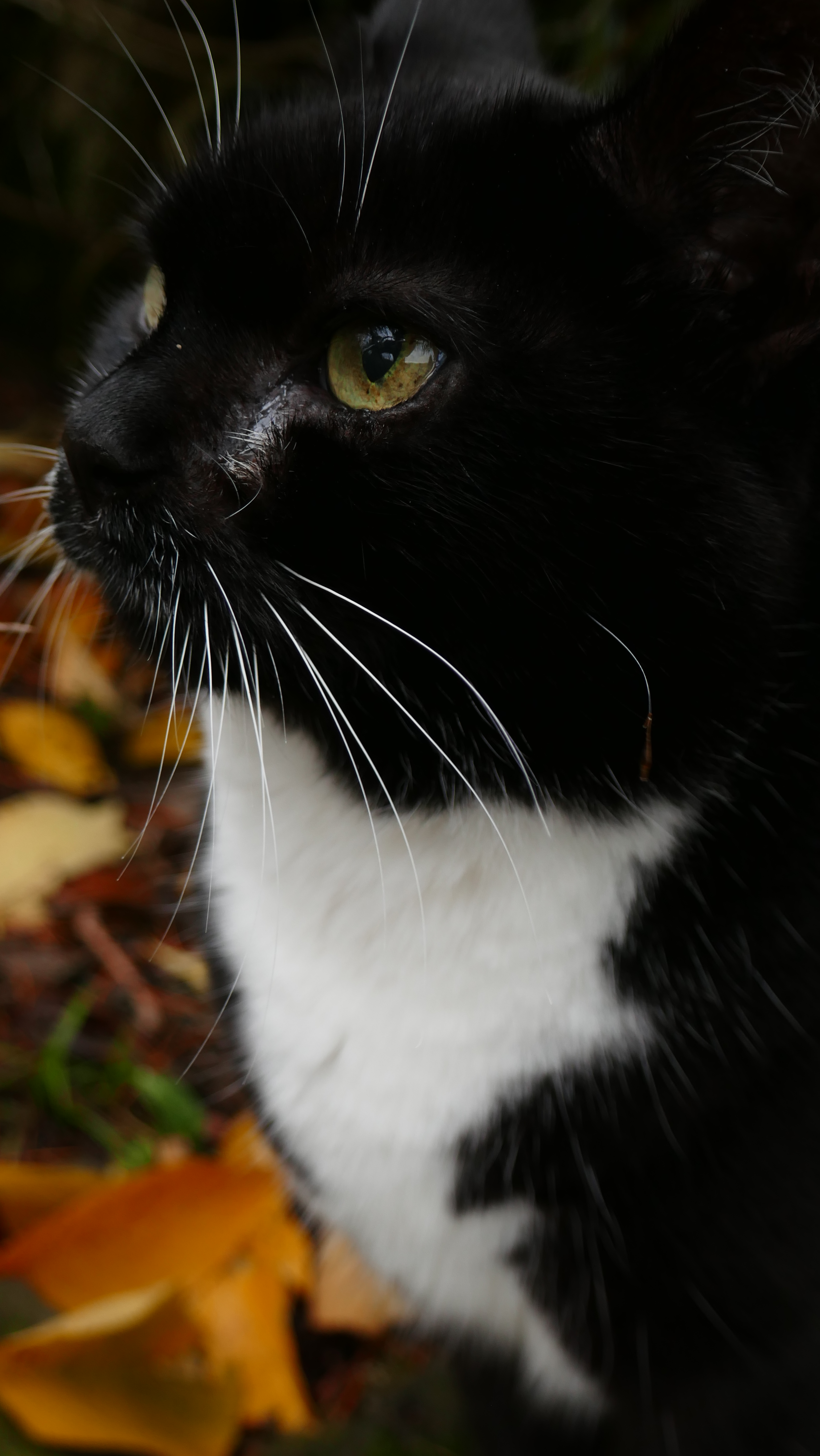
Mili in the autumn leaves
Mili being closely followed by Hecate
      
Badger on nightly patrol, by the pond


Sunday, 30 August 2020

Goings On

  
Mili is apparently intrigued by the goings on across at the opposite border. First, her attention is caught by the woodpecker, soon to be followed by an inquisitive grey squirrel who is also keen to check out the competition. Perhaps, the squirrel, being native to the Eastern half of North America, may be privy to the  wisdom of the first nations people, who prescribe the woodpeckers drumming as a means to journeying (transcendentalism), and so many tribes considered the woodpecker as an other-worldly messenger, and a prophet. Hopefully a good sign!
                                                                                                        

Thursday, 16 July 2020

Summer time and the Livin' is Easy

Although the longest day is now behind us, we are now at the mid point of summer meteorologically speaking. The garden is filling out in its seasonal finery, although it would look a little better if we had some sunshine.


 Mili and Hecate are getting outside when it isn't raining but patrolling and marking out their territory seems be a very low priority.

By contrast the blackbirds have been exceptionally busy feeding their young. They are nesting in the ivy and conifer hedge at the side of the house. It is positively exhausting watching how busy they are going back and forth with provisions for their young. Pictured below is the female blackbird with a mouth full of goodies for taking back to the nest.


My approach to the garden is distinctly leisurely by comparison to the no stop activity of the blackbirds. Perhaps I should be a little more forgiving of Mili and Hecate for taking things real easy..... George Gershwin had it about right. 

Friday, 19 June 2020

Rain Does Not Stop Play

The weather might be a lot less summery than could be expected, despite the hastening approach of the longest day. But this does not stop the work that needs to be done.

The badgers are busy with their nocturnal foraging and Mili is keen to keep up with her early, misty morning patrols.


Saturday, 25 April 2020

Badgers after Dark

The wildlife has always been an essential and integral part of our outdoor space. It might cause a few headaches but the thoughts of being able to share and coexist with minimal (or modest) mutual disruption is a very pleasant thought. Watching the wildlife is a challenge, as a lot of the activity is nocturnal.

On occasions we can get a peep into the badgers world from the bedroom window which overlooks the lower pond. These video images were taken a few weeks ago.


However, I have been intrigued to learn a little bit more about the garden at night so I have invested in a basic night time camera trap. The first results are quite encouraging. These images were taken around the back of the shed, directly outside the entrance to the set.


And the next morning the night time activities seemed to be of interest to more than just the human residents. A curious Hecate has a good sniff around!


Friday, 17 April 2020

Newt

Wildlife in gardens can sometimes be a challenge, as selected blog posts will clearly demonstrate. However, sharing our garden will always be at the very heart of our gardening philosophy. As much as we enjoy the planting schemes, outdoor living spaces and general sense of well being that the garden provides, it would be immeasurably diminished without the diversity of wildlife which will visit on occasions.

It was a pleasant surprise, therefore, to discover the upper pond is now home to newt(s). The little creature was discovered when I was raking out some of the surplus oxygenators. It swiftly returned to the safety of the pond and I did not get another glimpse until yesterday.


Although not the most distinct of photographs, the newt (which I suppose to be a palmate newt, if its throat is a pale colour?) can be seen in the water just a little deeper than the tadpole. I must confess to being mesmerized by the little fellow for quite some time!  Of course afterwards I had to do a little research and found some particularly interesting facts.

Newts are members of the Salamandridae family, and there are over 60 species. All newts are salamanders, but not all salamanders are newts....

Newts are small semi-aquatic amphibians that look like a cross between a frog and a lizard. Newts possess several interesting characteristics. For example, though they may look cute and harmless, they can be dangerous; toxins secreted through the skin as a defence mechanism could kill a person. Newts also can regrow lost limbs and organs. That ability makes them important subjects in medical studies on regeneration. Also, some newts have flown on space missions
Livescience.com

However, not all stakeholders in the Pennine garden are quite so fascinated.

Hecate looks for something else of interest


Monday, 13 April 2020

Garden Springing into Life


The garden is beginning to come alive now Spring and some seasonally pleasant sunshine has arrived. The Pennine garden is also alive with the night time scuffling of the badgers. It is noticeable that the set under the shed is being well used and trails of bedding are found leading to the entrance most mornings. The video was taken last night as the badger came down to the pond, so the light levels are obviously quite low.


The snake's head fritillary are also looking pretty and qualifies for my plant of the month. I am aware that ours are somewhat behind (as a long time friend and gardening pal, has already noted) but its plant of the month status has been prompted by his keen observations in his own garden.

Friday, 27 March 2020

Sisyphus Revisited

Sometimes gardening can be a test of resolve. Over the past few weeks the local wildlife has been particularly active. The deer population have taken a delight in chomping the spring bulbs, most particularly decimating the tulips, while the badgers have taken to digging up the flower beds for me (and trashing the perennials therein!)

Badger Damage
Deer Chomped Tulips

Filling in the holes in the lawn, and giving it the first cut with raised blades felt a little futile. Repairing the beds is sad but has to be done but there is no salvation for the tulips!

However, by way of compensation for these sysyphean tasks we have had some rather nice spring weather this week, a blessing given that we are in national lock-down.

View Across to the Farm

Hecate iInsepecting the Spring Plants
In the meantime I hope you all stay safe and well in these most difficult of times, wherever in the world you might be.


Friday, 25 October 2019

Caught in the Act

Earlier this week we had some cheeky visitors over for a meal or more precisely breakfast as these snaps were taken at 9-00 in the morning. There was a total of three deer in the garden, each of them munching away happily on our plants!

Enjoying the ox eye daisies

Head down for second helpings

What, me, not guilty!

Monday, 9 September 2019


It is now back to school time and so we drift gently into autumn. While it is tempting to think that we have had nothing but dismal weather over recent weeks, the evidence of some of my photographs would suggest otherwise. There is till plenty of time for enjoying the richer hues and the insect life that are drawn to them. Mili, as usual, is keeping a close eye on my activities, so much so that I am sure she has missed the butterfly approaching her from 11 o'clock.


This is also the season for the heathers that we have, to come into flower. They too attract plenty of interest from the insect population and the hover flies seem to particularly enjoy this part of the garden. Heathers do well in our acidic soil and being raised above the level of the patio they do get plenty of sunshine.

I have not always been over enamoured with the heather bed. I seem to struggle to get a pleasing balance between the different varieties. There always seems to be one more vigorous and dominant species. However, if I had one top tip it would be to trim them back promptly once the flowers have gone over. Otherwise leggy plants will inevitably be the result.


Friday, 28 June 2019

Details

This picture encapsulates so much of what makes gardening fascinating, the detail. Take a moment to look closely and it is surprising what you will notice when looking around a garden, it might be your own, a friends or a show piece stately home. I think most gardeners have an eye for the detail and we all notice different details. It is not simply what might catch our eye, but also what we look for in an outdoor space.

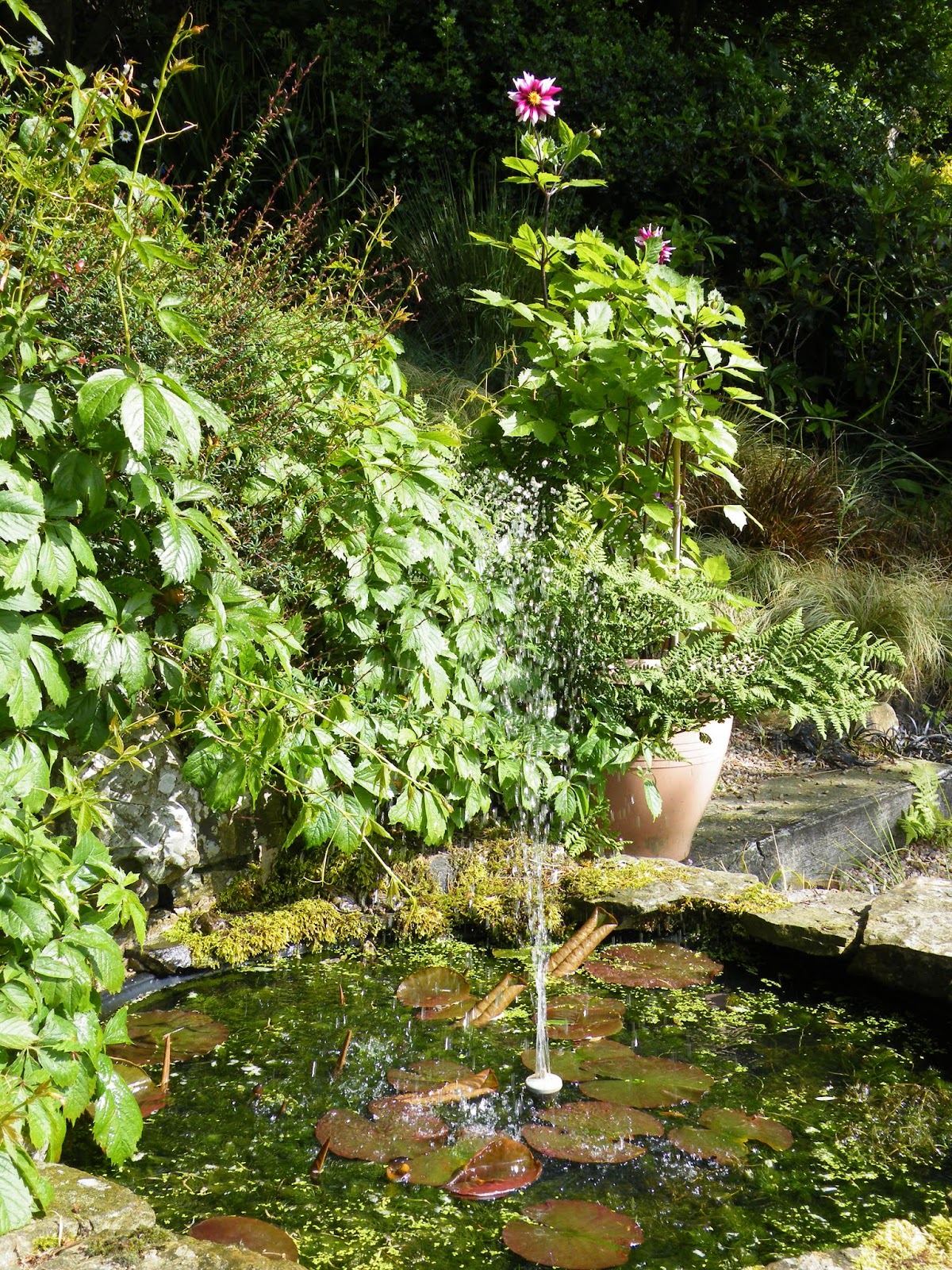
At first glance it might appear an ordinary photograph of the upper pond. I might examine the scene and think of the work that needs doing tomorrow. But a closer inspection might reveal something different.

In the background is a tub with one of our dahlias "Edge of Joy". A candidate for my plant of the month but there are not quite enough blooms open as yet. It is the first time I have put a tub in this part for the garden and I think I rather like it up here. But the beauty of a tub of plants , it can always be moved!


A little while later a further detail caught my eye around the edge of the pond:


the frog "picnic" in the sunshine. If you look closely you will notice an army of five frogs enjoying the summer sunshine!

Monday, 20 May 2019

Wildlife in Spring

Over the past few weeks the wildlife activity seems to have become more noticeable. The reality is that the natural world has truly emerged from hibernation and the business of spring is well underway. It is not just the plants which have blossomed into life again but the pond is teaming with tadpoles, the cotoneaster alive with the buzz of pollinators, the trees are full of eager birds and the hedgerows and sheltered places simply bustle with all manner of animals large and small.

I have been lucky enough to catch a few on camera, admittedly not all with the most artistic of shots but it does remind us how lucky we are in this part of the country.


Wildlife does come with a cost to your plants and lawn but the price is a small one in the grand scheme of things. It means I will never have a "Chelsea garden" but they are not terribly realistic anyway, at least not for the average gardener. In fact, I would strongly advocate that we all make space for wildlife on our plots and cherish a little bit of an unkempt corner (perhaps it can be a little labour saving too!)

However, I do add a word of caution if you share your outdoor space with felines, please use some thought when putting out any bird food or feeders. It is perfectly feasible to achieve but common sense is required; as I mentioned in this previous post cats and wildlife are not incompatible.

Friday, 10 May 2019

Labour Saving Gardening (part 2)

I must state at the outset that I am an avid fan of having water in a garden. No matter what the size of your plot there will be room for a water feature of some sort. The sound of moving water is so relaxing while the majority of features are a real boon for all manner of wildlife. Consequently, my next top tip for a labour saving garden is
                                                 install a water feature
and in most instances, the larger the better.


While some people may be put off by the initial task of designing and building your pond, once this has been completed to your satisfaction, a water feature is remarkable low maintenance. For instance the pond above, close to the patio requires an annual maintenance clean up, including servicing the pond and its filter. This at most will be an afternoons work. Every few years the lillies may need re-potting or some new marginal plants adding but after this there is little effort required, other than scooping out any excess weed or oxygenator growth.

The fact that we do not keep fish in the pond does reduce the effort but this decision was made at the very beginning as the ponds are modest in size and the two cats do not really need any more distractions. The balance of plants and water is not a difficult task to achieve and so we rarely have any issue with discoloured or cloudy water.

In reality, I am confident in saying that a pond is the biggest time saving addition you can ever make to your garden. However, you might have to factor in the time consumed by just idling by the water and watching the wildlife go about their business. 


Friday, 1 February 2019

Deer: to deter or not to deter?

Three views from the window caught my attention and reminded me of the extra challenges facing the Pennine gardener and, for that matter, the wildlife. 

The snow has blanketed the hills for days. If you do not need to go out, then it can be a seasonal treat. But it has its difficulties, not least for the wildlife, and the local population of roe deer who venture down the hillside in search of something to nibble. Indeed, it is not only during the hostile weather that the deer come down into our garden but they have become a positive nuisance when they take a liking for some of my newly planted specimens. 

I have decided that this year I will research which plants seem less prone to be munched by the deer and I will share the results in future blog entries. However, from my experience last year the grasses seemed to survive surprisingly well as did the laurentia but the blackberries were all munched! 

I would always want to think that the wildlife would be welcome in the garden but at the same time I have no wish to put a lot of deterrent wire mesh guards around all my plants. A compromise will be actively sought for 2019. To deer-ter or not to deer-ter?


Roe deer tend to be solitary creatures during the summer months but often congregate in small groups during the winter, which explains why there were a group of three the other day. The following two web sites are well worth a visit for more detailed information: