Showing posts with label pots. Show all posts

Sunday, 20 September 2020

New Recipe: bulb lasagne revisited.


It is over three years and more than a hundred entries ago since I last featured the bulb lasagne on these pages. This year I have changed the recipe just a little and started to put them together a few weeks earlier. The thinking behind the rush to get them started is that I like to make up the odd extra tub to give to friends. However, this wretched pandemic has prompted the earlier than usual planting up of the tubs, before the next attack on our civil liberties results in a new lockdowns.

The one seen in the pictures above is for the next door neighbours who kindly look after our two felines when we go away. Another has found its way to a very good golf buddy and his understanding wife. They have a refreshing new found passion for all things horticultural and a recent visit to their garden has sparked a few promising ideas of my own. The pictures show how the layers are built up starting with usual crocks and drainage materials before the first compost layer is added.

The alteration in the recipe for this year has been the addition of some crocus in the second layer. So working from the top down, this years tubs have:
~ winter pansies on the top, although they will fade quite quickly they can be deadheaded to prolong their display and they do seem to distract the squirrels from excavating the buried bulbs (I hope this is not famous last words)
~ first sub layer are the irises and crocuses, this year iris reticulata Joyce and crocus Orange Monarch.
Depending on the severity of the winter they will start to show in January or February
~ second sub layer are the daffodils, narcissus King Alfred and narcissus Jonquilla Martinette, hopefully they will emerge in March
~ the lowest layer is the tulips, and this year the complementary Triumph Slawa and Triumph Synaeda Amor should complete the display by April/ May time.

Despite this focus on next spring, the garden is still doing its best to hang onto its summer glamour so I have been in no particular hurry to start the cutting back and tidying up!
Top tip: over the past 30 years the September climate statistics clearly indicate that a late "Indian Summer" is always a distinct possibility. So planning for late season colour is more important than ever. 


Thursday, 23 April 2020

Bringing the outside in and taking the inside out!

Agapanthus needs to be acclimatized
This is the time of the year when the plants in the conservatory have to be taken outside on a daily basis for hardening off. When dusk approaches they are brought back inside. I keep an eye on the Met Office weather forecasts and if it is likely to be a mild night then the plants may be left outside. But more often than not they are brought back into the safety of the conservatory.

The conservatory is also a space for relaxing and by the beginning of May the notion of bringing the outside in becomes more important. This essentially involves trying to make a natural transition between the greenery of the conservatory house plants and the vegetation of the patio and pond.


Inside meets outside
Lilium Queen of the Night
 
It is now rather dated to want a neat border between home and garden, apparently the latest dreadful buzzword in home design is “transterior” – where there’s an utterly seamless segue from one to the other.

The ideal is a much more symbiotic outcome, where buildings are more sympathetic to the landscape outside, and vice versa. Twenty years ago, the must have was the ‘outdoor room’. Today the indoor and outdoor are being designed merge, with elements of greenery joining the spaces with more natural materials  inside, and the architecture flowing outside.

Top tip: while most of us cannot easily redesign the architecture of our homes, we can bring the outside in with the judicial placement of seasonal pots by the front, back and conservatory doors. A simple illusion of bringing the garden closer to the indoors. Combined with a plant pot on the windowsill enables the "bringing of the outside in and the inside out."

Sunday, 11 August 2019

Garden Moods

The garden and the mood of the garden can change quite dramatically depending upon the time of the day and the lighting conditions. The rather flat light during the overcast day gives the upper grasses a cool and distinctly unseasonable feel. But I do think it rather emphasizes the blue tones in the grasses, in particular the Festuca glauca 'Elijah Blue' which is a stunning ornamental grass with silver-blue needle like foliage. I am fond of this grass which forms dense clumps and can be grown in borders or containers on the patio.
By contrast the night scene on the patio (with illumination provided by the security lamp) is more intriguing. Some of the vibrant colours seem to really stand out, even the shadows provide a little mystery. The more naturalistic planting of the cluster of pots seems to be more subdued and is better in the daylight scene.


I have read many articles about designing to create a mood in your garden. What I find many of them are really advocating is choosing a theme, probably to match a mood that you may imagine you have at that period in your life. Common advice is often along the lines of

  • Select the theme or mood – try to make it harmonious with your location, the architecture of your house, and your microclimate.
  • Study a bit about the design you’ve chosen and determine what key elements give it its integrity and feeling, possibly Mediterranean or English Cottage, Woodland, Japanese, etc.
  • Determine ways to interpret those elements in a manner that you find aesthetically pleasing, affordable and suitable for your part of the country, soil type, aspect etc.
However, I believe that the mood is, in many ways, beyond our control. The garden is an organic and living entity often with a life and mind of its own. So my top tip would be to embrace the changing moods of your outdoor space, do not try to restrain your ambition for your garden. After all our temperate western margin climate must the the best in the world for being able to take advantage of the capricious  nature of the great and marvellous outdoors.


Friday, 28 June 2019

Details

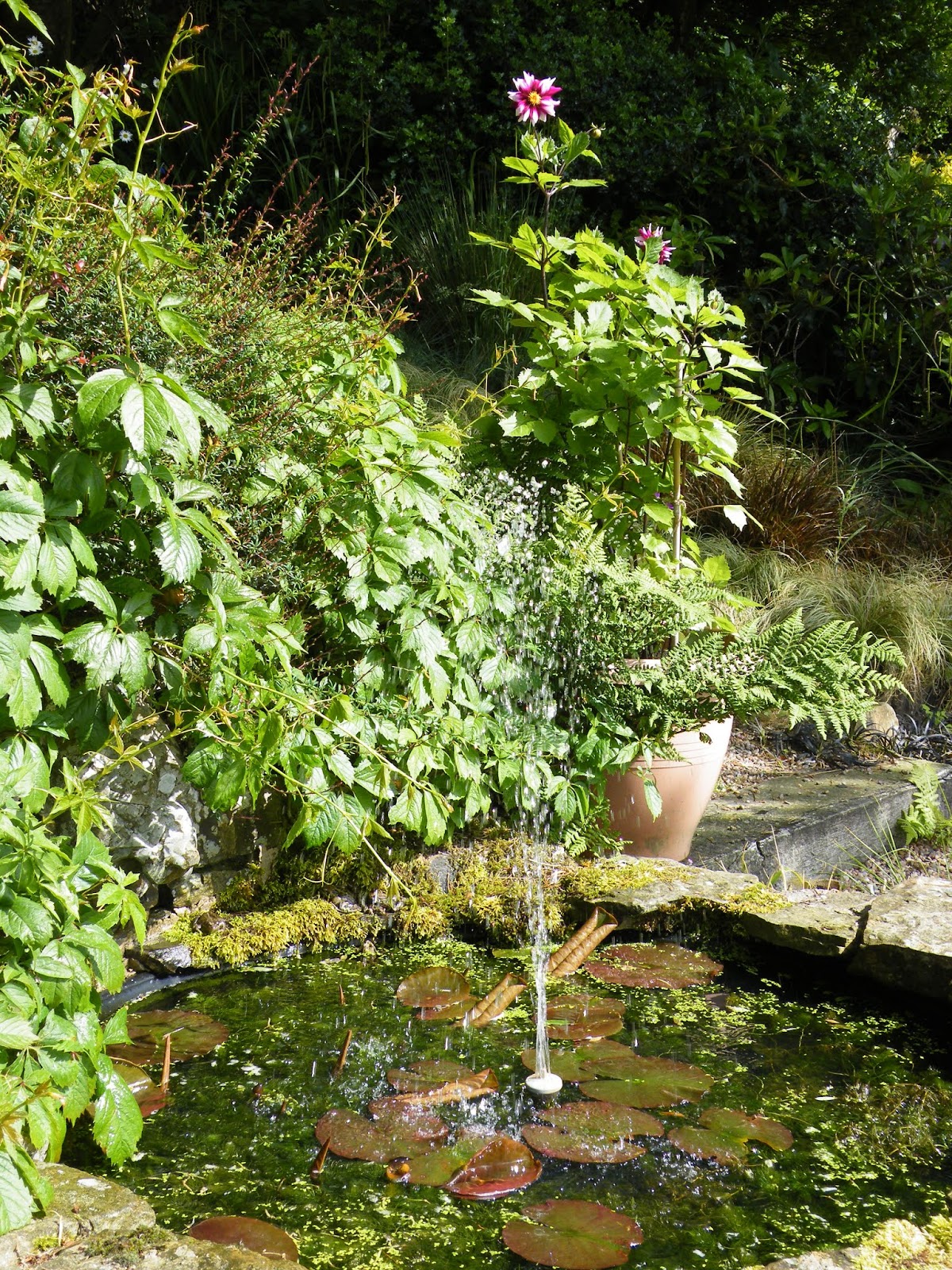
This picture encapsulates so much of what makes gardening fascinating, the detail. Take a moment to look closely and it is surprising what you will notice when looking around a garden, it might be your own, a friends or a show piece stately home. I think most gardeners have an eye for the detail and we all notice different details. It is not simply what might catch our eye, but also what we look for in an outdoor space.

At first glance it might appear an ordinary photograph of the upper pond. I might examine the scene and think of the work that needs doing tomorrow. But a closer inspection might reveal something different.

In the background is a tub with one of our dahlias "Edge of Joy". A candidate for my plant of the month but there are not quite enough blooms open as yet. It is the first time I have put a tub in this part for the garden and I think I rather like it up here. But the beauty of a tub of plants , it can always be moved!


A little while later a further detail caught my eye around the edge of the pond:


the frog "picnic" in the sunshine. If you look closely you will notice an army of five frogs enjoying the summer sunshine!

Monday, 15 April 2019

Containers for Spring Colour

This year we have increased the number of pots with Spring bulbs and colour. The logic is simple, pots can be concentrated by the patio and terrace, the slightly more sheltered parts of the garden and the areas visible from indoors. We have planted out bulb lasagnas for years but this year we have gone much further.

The front of the house has always been the prettiest area in the spring, starting with the snow drops, daffodils, clematis and blue bells. Consequently, it was about time to put a little more focus on the back of the property.

Container and pots create instant impact in your garden. I enjoy the freedom to re-position the best looking pots into the most visible area. It is possible to grow just about any plant in a pot (at least in theory) as you can tailor the aspect, soil, drainage and, to a degree, most of the climatic variables, to suit your specimens. You can use a pot as a focal point, to add instant colour or to grow plants that won't normally grow in your soil. When they are spent the pots can be hidden away and in many instances the plants or bulbs can be saved for next year or even planted out into one of your beds.

The containers themselves are also important. The terrace will normally have just black or white pots to keep the theme but different colours styles and types can really enhance a dull corner or become a real statement. For practical purposes, I like to use plastic pots for the larger containers, this way they can more easily repositioned, an important consideration when they otherwise could be very heavy items.

There are many sources of inspiration on the net, such as David Domoney's blog, but if you like some of these ideas then please leave a comment.


Friday, 29 March 2019

Spring into Action

We are now nearly a third of the way through Spring. It has not disappointed, with some glorious days on the Pennines and, of course, some dreek and dank ones too. The gardens and gardeners have now sprung into action and there is a noticeable burst of activity. I always feel removing the covers from the garden furniture marks a critical day in the garden calendar and the onset of a series of jobs.

The picture shows the difference when the covers have been removed and the jet wash has blasted away the winter grime. No wonder it puts a spring in the step.

Before
After, during the inspection


It is revealing how much difference  a patio spring clean can make. The small tub in the centre has been a particular success, with the stark white of the fritilaria uva vulpis, a definite for repeating next year.


Other important jobs have included mulching, raking the lawn and some shifting of plants from conservatory to cold frame. This in turn creates more indoor space for yet more seeds and repotting of seedlings. In other words it is all go!

The same is true of the plant kingdom and the joy of seeing the new buds and the start of regrowth is simply a delight.


Wednesday, 31 January 2018

Leitmotif

Although it was not originally really a conscious element of the  garden's design I have really embraced the idea of having a recurring theme that ties together the different rooms. The use of the black grasses as a leitmotif does give the whole garden some coherence. Their correct full name is ophiopogon planiscapus 'Nigrescens'

The first of our black grasses where planted at the front of the grass border, they are intended to make a clear definition of where the lawn ends and the border begins. However, because they did so well and they help to set off other plants they have gradually been incorporated into other beds around the garden.

pot on steps leading to front door
It has now reached the point where all the parts of the garden must have (even if quite inconspicuously) some of these special little plants.The black grasses are small, easy to grow, clump-forming evergreen perennials. Although not truly black, they have very dark inky purple, grass-like leaves. In summer, small spikes of bell-shaped, pale mauve flowers appear, followed by spherical, dark blue fruit. This unusual plant looks fantastic with other grasses, especially if  planted into gravel, and it provides a brilliant contrast with so many other plants in the garden. I have used them to pleasing effect in numerous tubs and pots.

It is because it grows from short rhizomes from which the tufts of grass like leaves develop, that it is very easy to propagate. All our black grass has come from just a few specimens. It is native to Japan, where it grows on open and forested slopes so is plainly suited to our climate.


Monday, 17 April 2017

Damp Pennine Weather.

The wet weather of the past week has curtailed the outdoor activities somewhat. Mili and Hecate have barely ventured into the garden. However, there is no point in bemoaning the climate, simply get on with it. The splendid BBC Scotland programme "Beechgrove" is an inspiration for UK gardeners who also do not have the home counties climate to cosset their plots.

The leaden skies may not inspire but the trees are coming into leaf, there is life in the herbaceous border and the grass now needs cutting. The seasons are a magnificent framework around which the gardeners calendar must fit.

The view is looking up the garden towards the tress which frame the upper sections. The ornamental grasses are up there (not ideal being a little shaded) and the compost heaps. The shed is also my tool store and is currently awaiting the clematis to come into leaf and screen off the side.

The final phase of the bulb lasagnas now the tulips are out. I am not too sure about the colour of the tulips this year, they rather remind me of the rhubarb and custard boiled sweets!

Thursday, 30 March 2017

Bulb Lasagne

A bulb lasgne is an easy way to guarantee some early season colour. A job to do in October, simply pop down to your local garden centre buy your favourite bulb selections and garden. I  like to use two black planters that happen to be supported on legs. This is useful for drainage and protection from slugs.

Starting from the base of a couple of old bits of broken crockery add a layer of compost. Then bed in a good selection of your favourite tulips bulbs. More compost and some nice daffodils can be added to make another layer. More compost, then I add a personal plant favourite, dome dwarf iris bulbs. Finally, another compost layer and then some winter pansies for the top. Hey Presto.


Although my winter pansies never seem to last much more than a couple of weeks before beginning to look increasingly disheveled, at least they offer the bulbs some protection from hungry squirrels. My other tubs need a protective layer of chicken wire draped across the top. Do any readers have any good tips for prolonging the just planted look of my pansies? I suspect the rather gloomy November light down on the patio had something to do with it.


Patio furniture still under cover and a Mili taking shelter in a secret hideout