Wednesday, 31 January 2018

Plant of the Month

snowdrops at end of January 2018
The snowdrop is such an amazing little tough nut. Fortunately we have a mossy bank at the front in which a ""mish mash" of the little marvels have been naturalized. The species has long been associated with winter – the latin name, Galanthus nivalis, literally translates as ‘milk flower of the snow’. Although they thrive in lightly shaded woodland areas ours are pretty exposed at the front of the house.

The white flowers hang from a single stem with three inner petals (called tepals) curved into a tight pointed oval and three external petals loosely opening outwards. These flower heads can be ‘single’ – one layer of petals – or ‘double’ – multiple layers of petals – headed. The grassy foliage is a vibrant light green. Apparently,there are more than 2,500 varieties and, although not a native species, they are now well established in the wild in the UK. As you can see from the photograph we have a rather random selection

In British folklore; snowdrops have come to symbolize hope and purity. In modern medicine a naturally occurring substance within the plant, called galantamine, is used to help treat the symptoms of Alzheimer’s disease. However, the bulbs themselves are poisonous, a fact which perhaps lead to the superstition that a single snowdrop bloom in a house represents death.

My top tip would be, if you are naturalizing some in your own garden, plant them out "in the green". That is plant in late spring, buying just after flowering when the leaves are still green. This is the simplest way of establishing snowdrops.

Sunday, 28 January 2018

Mid Winter


 January is always a challenging month for gardeners, but this s
year it feels like the elements have continually conspired against us. Prolonged periods of snow and then rain have totally saturated the soil. Obviously this means we should stay off the borders and be careful to not tread too frequently on the lawn; easier said than done when you need to access the shed!

The occasional nice day is so welcome and gardeners and cats are desperate to make the most of them.


The sunny days might be infrequent but are appreciated all the more for their rarity. All the pictures were taken this month, most of them on Friday! It is difficult not to be impatient waiting for spring but there is still so much to be appreciated in the depths of winter. The grasses, for instance, provide year round interest.

However, today it is windy and rainy again, so it is back to indoor jobs, washing out and disinfecting the pots. 


Tuesday, 16 January 2018

Bringing the Garden Inside

The Christmas table decorations mentioned in an earlier post have prompted me to think about the occasions when flowers have been brought inside. While I am a firm believer that plants are meant to be kept outdoors, bringing the occasional arrangement inside can liven up the house.


 The sad thing about cut flowers is, of course, that they do not last long in our centrally heated homes. Consequently, I do not reserve any particular outdoor space for floral arrangements. To try to keep the flowers a few extra days we trim the stems at an angle (helps increase moisture up take), scald the flower stem before arranging and use some proprietary flower feed if you have any. I remain to be convinced by the other web solutions such as vinegar or soda or even aspirin
and vodka! Alternatively, some plants can be grown inside (in our case the conservatory) and never find their way into the garden. The iris in the Clarice Cliff mugs above are such a case in point.

Monday, 15 January 2018

Feline Sorority

 They might not be blood sisters but having grown up together since "kittenhood" Mili and Hecate are the next best thing. With very, very different personalities they might not be expected to get along, but as these recent photographs show they rub along quite nicely.  Felidae (the biological family of cats) are solitary predators that, with the exception of lions, do not live in socially structured groups. However, while the wildcat ancestors of domestic cats are solitary animals, the social behaviour of domestic cats is, apparently,  more variable depending primarily on the density of cats in the area and availability of food sources. Consequently, we try to ensure that Mili and Hecate have no competition for food or living space in the house. The old adage that you should never have more cats than there are knees to sit upon, holds more than a grain of truth.

Felis catus (the species that is the domestic cat) has proved to be a remarkably adaptable species, and while retaining its roots as a solitary hunter, will adapt to group living through the development of social structures. In our house this means equal standings with neither exhibiting dominant characteristics. Although for the first few years Mili did try to "mother" Hecate and will still occasionally groom her.

This time of the year going outside is not the priority for our two cats. However, when the weather is not too hostile they still like to keep an eye on my activities.


Monday, 1 January 2018

Happy New Year

Happy New Year to everyone who happens to stumble across this blog, may 2018 be a happy and prosperous one. 

The garden and the cats still offer up plenty of enjoyment even in these bleak days. Traditionally it is a time for bringing the garden indoors. Our modest outdoor space does not afford the opportunity to bring in a Christmas tree but it does not preclude finding seasonal delights to brighten up the house.

The holly, ivy, skimmia japonica and a few pine cones make for a nice table decoration, that even me with my limited artistic and florist skills can manage. Simply arranged with a festive pillar candle and a few baubles it raises a little smile. 

Even if your own plot does not have the appropriate vegetation, just a little local foraging is sure to provide the requisite materials for anybody. Next year I must endeavour to be a little more ambitious and try and wreath for the front door; hopefully not a step too far. But gardening is all about trying new things...... now I must start on my list of resolutions for the garden in 2018. 

The garden has already started to show plenty of signs of life despite the recent inclement weather. The spring bulbs are poking above the surface and the snow drops will be out soon. Magic.


Friday, 22 December 2017

Roe Deer

The proliferation of wildlife in the Pennine garden belies its suburban location. All our gardens offer space for insects, birds and mammals. This week the roe deer have been easier than usual to spot, given that the foliage on all the deciduous trees and plants has now fallen. They are of course still shy creatures so do not really come up close to the house.

Roe deer are browsers that actively select different food types including herbs, brambles, ivy, heather, bilberry & coniferous/deciduous tree shoots. The top of our garden is therefore especially attractive to them. However, this browsing habit can be somewhat of a nuisance when it jeopardizes our new plants and puts the deer into conflict with some farmers. Given that the moorland around here is mostly hill sheep farming this is not too much of a problem. Consequently, the deer are allowed to flourish.

The picture was taken earlier this week in between the rain showers.


Tuesday, 5 December 2017

Winter


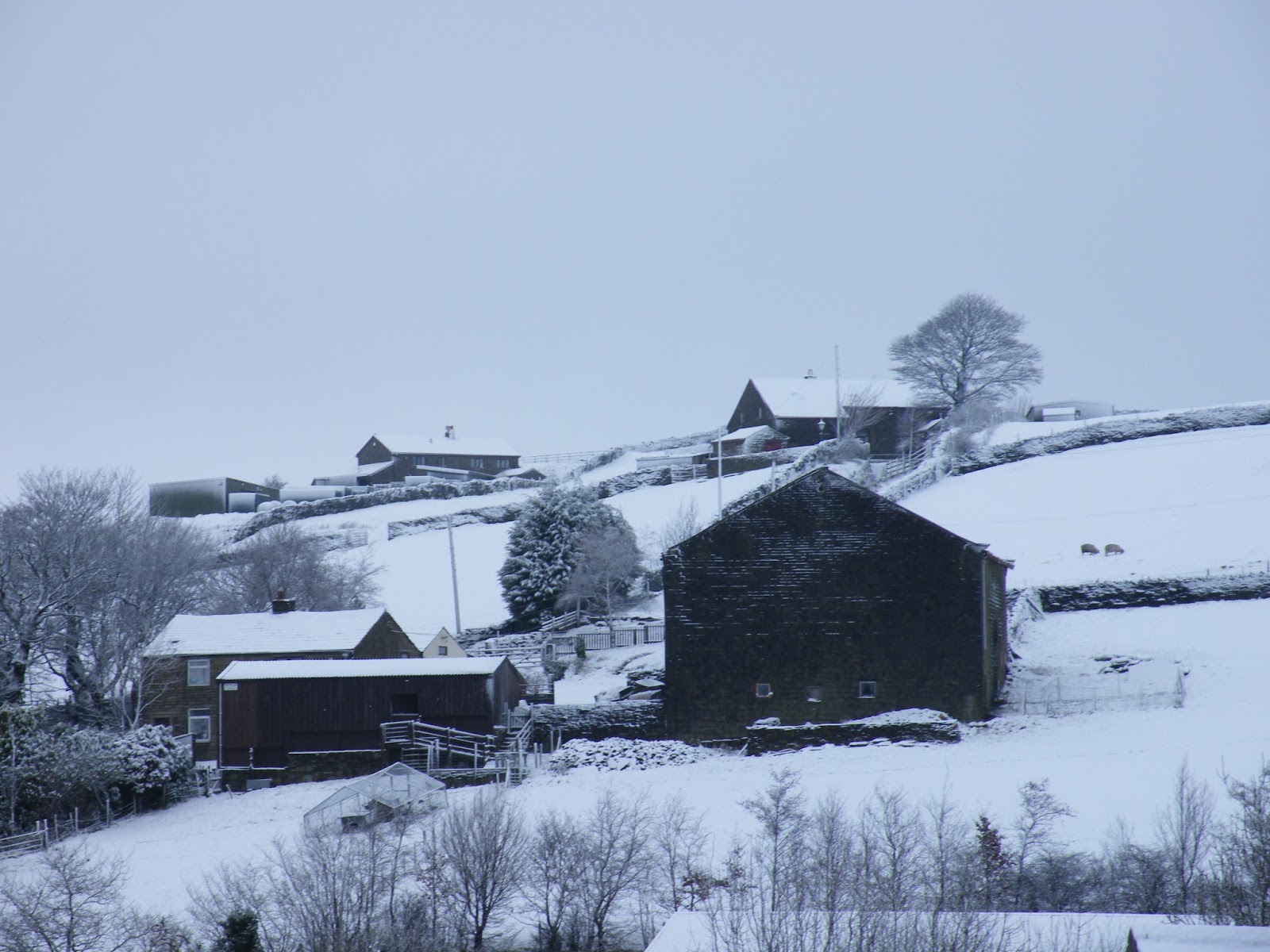
Meterologically speaking winter has now arrived. The met office has December, January and February as official winter months. As if on cue the weather has become colder and we have had snow.   The ponds have frozen over and the garden is shutting down. The cold weather also means some exceptional sunsets. The view is breathtaking. 

Two black and white cats are somewhat wary of the "cold, wet, white stuff" but they gamely give it a go, at least when one of their humans is outdoors as well.