Monday, 3 February 2020

Melancholic Charms

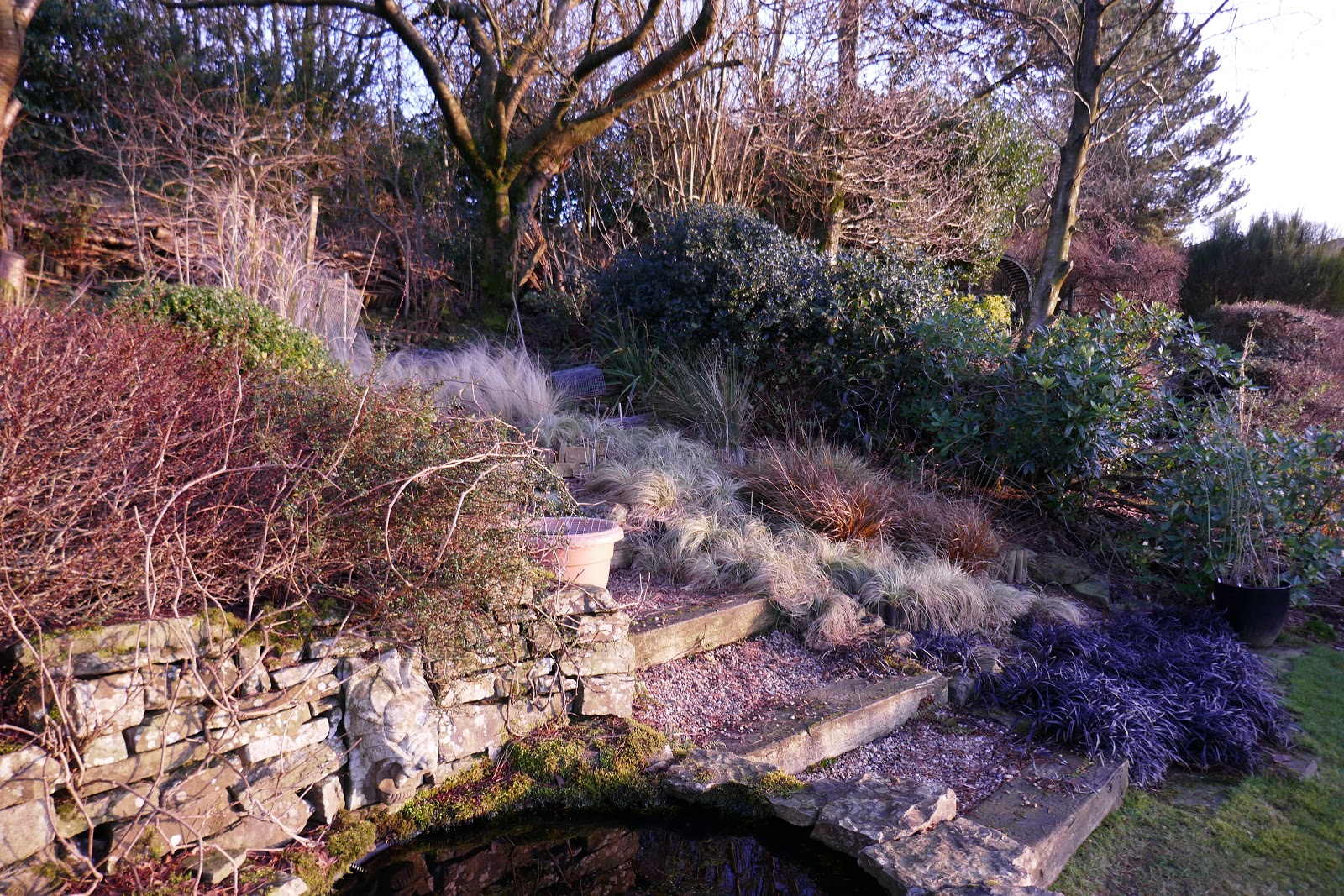
View Looking Towards  St Johns
 This might not be the busiest or prettiest time of the year in the garden but it certainly has a peculiar melancholic charm. Cold temperatures, rain showers and high winds have conspired to reduce our time outside, consequently, when I do make a foray up the garden it is all the more pleasing. The prospect of cold wet paws means that I am more often than not on my own but it is quite hard to explain to Hecate and Mili just what they are missing.

Snowdrops
Of course, there are those tough little plants that are already making a good showing. We currently have a bonny display of winter aconites under the weeping copper beech tree at the front and of course there is the annual snowdrop display, now approaching its best, which stretches from the curb side up to the front door. This is the first year that the aconites have really done anything other than just sprout leaves. I hope this will now be a regular annual showing as we have been patiently waiting for 3 years! Consequently, I think they deserve the plant of the month award.

Winter Aconites

Sadly there is always the need to patrol for winter damage. The wind has blown down several fence panels and the badgers are still digging up the lawns. Top tip: keep on top of the maintenance work while you can, the busy spring months will soon be upon us. This might not be a labour saving tip but it is a sensible way to spread the efforts across the calendar year. So as tempting as it might be to find some indoor jobs, wrap up and get outside.

Badger Scrapings


Tuesday, 14 January 2020

Mid Winter Colour


A distracted Mili 
Even in mid January the garden can still look attractive, in particular, when the light is going down. The grasses have been weeded and combed to remove dead material and they look so much better for what is really just a modest amount of attention. Sadly I am not the only one who seems to like this particular patch. The badger has been active here and damage repair has been a priority lately. Fortunately, the grasses and sedges are tough and if there is not too much delay they can be heeled back into place without too much trauma.

It is the winter months when the colours of the grasses are much appreciated and I can recommend the use of the sedges as, although not true grasses, as they do hold their own mixed among "real" grasses like the pony tail. They also seem to be best in large clumps or drifts when the contrasts are most evident.
Top tip: for winter interest do not ignore the modest grasses and sedges. While the merits of the ophiopogon planiscapus 'Nigrescens' have been mentioned in previous posts, the red hook sedge and frosted curls make for a nice contrast.


The conservatory is the rainy day refuge


Monday, 30 December 2019

Enjoying the Garden Together

   
upper pond
As 2019 approaches the final few days it is naturally a time for a little reflection. While this is not the reflection of the winter sun in the upper pond but rather what has worked well and what has worked less than well this year.

I will post about these in coming days but reflection takes time and a cup of Bovril to do properly. My last top tip of the year is to make time to enjoy your garden at all times of the year!


Of course all this hard work of sitting, planning and contemplating is so much easier with a little company. Mili and Hecate were quick to join me this morning and unusually seemed to enjoy each others company nearly as much.


Sunday, 22 December 2019

Winter Solstice


We have now passed the winter solstice and for the next six month the days will be getting longer. The Pagan celebration of Winter Solstice (also known as Yule) is one of the oldest winter celebrations in the world. Early people were hunters and gatherers therefore the seasons and weather played a very important part in their lives, pretty much as it does for gardeners and golfers. Because of this many ancient people had a great reverence for, and even worshipped the sun. The Norsemen of Northern Europe saw the sun as a wheel that changed the seasons. It was from the word for this wheel, houl, that the word yule is thought to have come. At mid-winter the Norsemen lit bonfires, told stories and drank sweet ale.

Sadly, I am increasingly of the belief that materialism has corrupted the joyous Christmas season. The antidote for me is simple, to relish the company of good friends and family and then to get outdoors and appreciate the raw beauties of nature. Of course, I am not the first to express these sentiments.

"The Christians stole the winter solstice from the pagans and the capitalism have stolen it from the Christians" George Monbiot (author and environmental campaigner)

Consequently, I heartily recommend getting your dose of fresh air, particularly if you can share it with family, friends or felines.

Hecate inspects translucent honesty seed pods
Mili in thoughtful disposition
 

 The Pennine vistas can still be appreciated from the top of the garden, despite the cold.The farmers fields a reminder that the season of celebration and merry making are still a time for grafting for many others.


And once you are outside seek out the remaining flashes of colour that seem especially valuable at this time of the year, the polyanthus and the grasses try their best before the first spring bulbs break the surface.
Finally, I would like to take this opportunity to wish all of you who visit these pages or stumble across them by accident all the very best for Christmas and hope you all have a wonderful prosperous and healthy new year.


Sunday, 1 December 2019

With Pointed Leaves

Yesterday, as is my usual habit on a Saturday morning, I read Nigel Colborn's gardening column in the Daily Mail. He wrote an interesting piece on hollies in our gardens. This prompted me to think about how the Ilex aquifolium, meaning with pointed leaves has a really undervalued role in our Pennine garden. It can clearly tolerate a variety of planting locations and as such it has served a range of understated but very useful functions.

The specimen to the left forms part of the boundary between ourselves and the neighbours. It is currently adorned with the bright red berries that are synonymous with the holly and which are much appreciated by the bird and animal life in the garden. Of course, both male and female plants are required if the tree is to produce its berries.

At the front of the house the hollies serve to mask the rather functional and not to pretty brick steps. They are particularly valuable because their evergreen nature distracts the eye somewhat from what is now rapidly becoming a rather bare looking cotoneaster plant. The evergreen characteristic is the reason why the pre Christians are thought to have believed that bringing inside boughs of the holly tree would ensure a return of Spring after the winter. It is connected to the integral magical powers that allowed the holly to retain its leaves. Of course, like many pagan traditions it has since been incorporated into Christian beliefs so that the berries are now symbolic of the blood of Christ and the sharp points (of many but not all hollies) represents the crown of thorns.

Elsewhere the hollies serve to give that all important winter structure, such as as backdrop for the ornamental grasses. As you can see they are in need of a trim not least because the holly is actually a tree and will keep growing if not kept pruned. However, this is not a major task  because most hollies grow at only a modest rate, but my top tip would be to plant with a medium to long term view and get a decent pair of gardening gloves.

Pliny the Elder (AD 23-79) had some advice about the best spot to plant,  in  “Historia naturalis”, an encyclopedic study of plants and animal life, he noted that if Holly is planted near a house or farm, it would repell poison and defended it from lightning and witchcraft. You might want to bare this in mind as well.


The hollies we have at the front have lovely variegated leaves. These are particularly nice, as when using the steps, at the front or side of the house, you are certain to get a good close up view of these lovely and underrated garden plants. 

I am often guilty of giving too much time and attention to my garden specimens that are either "flashy" or rather tricky to grow. But Nigel Colborn has reminded me not to take the plants that do well, without much fuss, for granted.


Friday, 29 November 2019

Putting the Garden to Bed

Before I retired it was always a sad but satisfying autumn half term when the garden was put to bed for the year. The essential jobs were done to keep our plot safe from the realities of a Pennine winter. The last mowing, collecting the leaves, combing the grasses, forking the lawns, trimming the heathers, bringing in the tender plants that will need protection from the harshest frosts and snow and cleaning up the ponds from the debris which might otherwise cause some wildlife threatening water quality issues (particularly a danger with smaller ponds).
Top tip: embrace the comfort involved in "putting the garden to bed" but do not skimp on the jobs as they will all pay dividends in the spring.

Now that I have more time on my hands the whole process of readying the garden for the winter is that bit more relaxed but none the less satisfying. The joys of autumn can be savoured without undue hurry and the first frosts can be awaited patiently. The jobs will all get done (assuming the rain eventually abates) and the winter months can be enjoyed in front of the fire and in the potting shed.

Agapanthus are lifted ready for storage
Pond is now cleared of fallen leaves and debris
At this point it is worth while sitting with a cup of Bovril and reviewing the scene; time to start making plans for next year. Where did I leave that seed catalogue?


Clearly nobody has told Hecate to avoid walking on the lawn when it is frosty

A garden is a grand teacher. It teaches patience and careful watchfulness; it teaches industry and thrift; above all it teaches entire trust. Gertrude Jekyll


Thursday, 7 November 2019

Hecate & Mili Brave the Elements

Now the autumnal conditions are firmly set in, it is not only the gardeners who need a little motivation to leave the fireside and get outside. Hecate and Mili have found the allure of an open hearth rather hard to resist. The damp grass is a challenge and the stiff wind blowing across from the moors rather daunting for the smaller felines. However, to their credit they will venture up to the top of the garden, at least when their human is outside to provide some much needed reassurance.

Hecate
Mili
   The two cats are are welcome distraction from the tasks in hand. Collecting leaves and keeping the pond respectably free from the arboreal debris being important jobs for this time of the year. The benches will also be getting a last brush down and treatment, and then, one of the sadder points of the calendar, they will be covered over for their winter hibernation.

Top Tip: it is worthwhile taking a little bit of time and effort to protect your garden furniture, as even hardwood pieces will succumb, eventually, to the ravages of a Pennine winter .