Mili is apparently intrigued by the goings on across at the opposite border. First, her attention is caught by the woodpecker, soon to be followed by an inquisitive grey squirrel who is also keen to check out the competition. Perhaps, the squirrel, being native to the Eastern half of North America, may be privy to the wisdom of the first nations people, who prescribe the woodpeckers drumming as a means to journeying (transcendentalism), and so many tribes considered the woodpecker as an other-worldly messenger, and a prophet. Hopefully a good sign!
Sunday, 30 August 2020
Wednesday, 19 August 2020
Little Details
The details of a garden are critical to the bigger picture. The pond shown above needs a sympathetic surround of apparently overgrown walling with hidden architectural detail, where as the orange crocosmia seems so much more vibrant with the background of the weeping copper beech. While some of these finer points are simply happy accidents, others have been deliberately engineered but with the hope that they look quite naturalistic.
When combined the effect can be quite pleasing to the eye, hopefully without being too obvious. The bigger picture of the ornamental grasses hopefully gives this impression.
Top tip: when visiting other gardens take a little time to study the more intricate points, take photographs of the finer details and try to look beyond the bigger picture.
Of course, Hecate likes to be part of the bigger picture too!
Labels:
design,
Hecate,
ornamental grasses,
top tip
Wednesday, 12 August 2020
Why I love August
I wonder how many people are like me and strive for the impossible photograph that will capture the essence of the garden. Different views, aspects plants, lighting are all variables that cannot be encapsulated in a single image. The view above is particularly nice at the moment but it shows only a fraction of the flowers that are in bloom in August.
By contrast the image below is a montage of flowers and blooms taken on 12th August 2020. None of the plants are duplicated but it still does not convey the spirit of the Pennine garden. However, it speaks quite eloquently of why I love August.
Tuesday, 28 July 2020
The Colour Purple
It occurred to me when writing an earlier blog entry on the pastel bed, that the colour of the season is most definitely purple. Of course, when an idea like this has germinated it is strange how much more evidence you can find to back it up. Even though the weather has kept me indoors more than I would like the colour purple is still there.
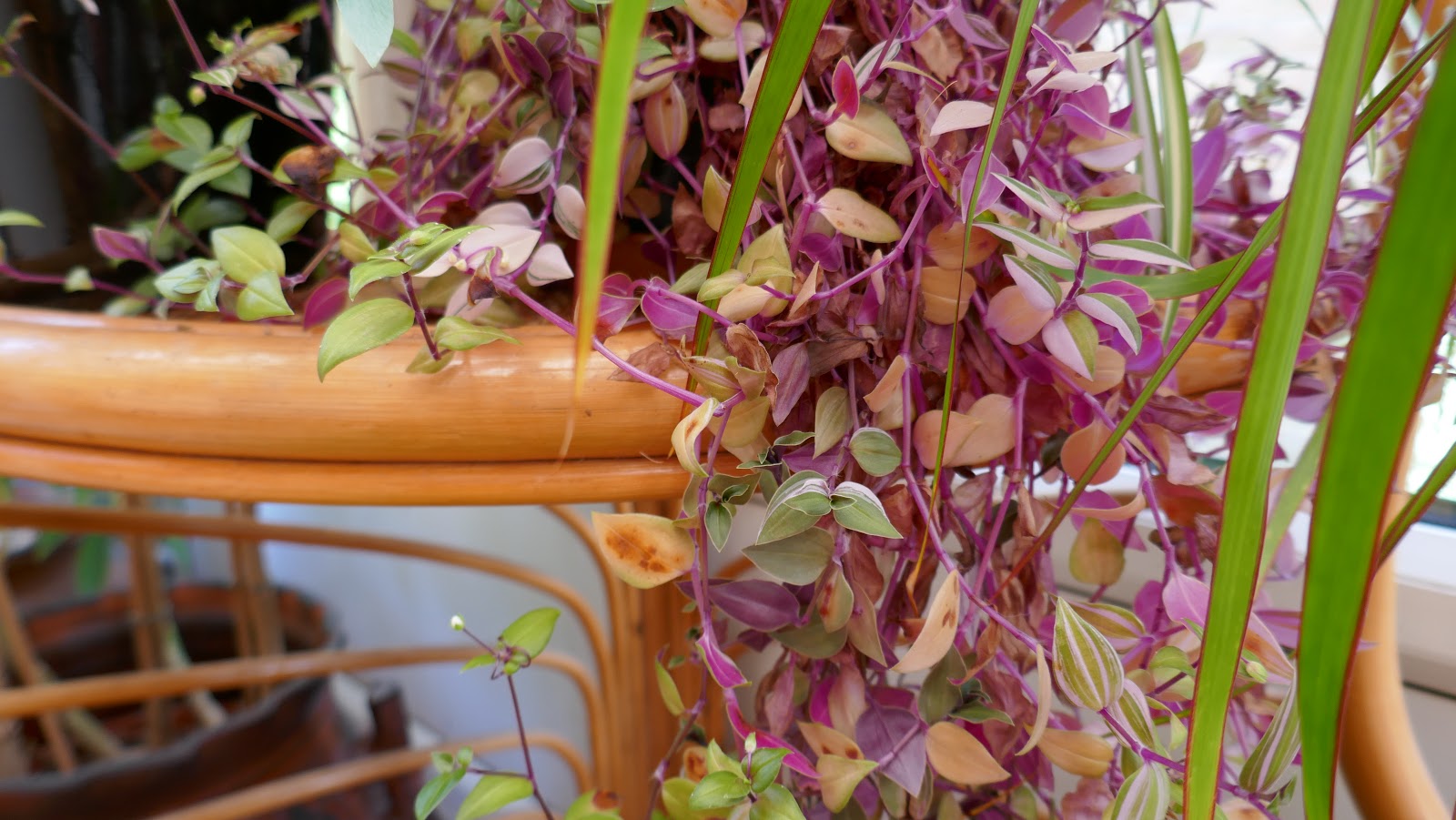
The house plants by the door leading out to the patio are doing very nicely and are all the better for the purple flowers of the orchid and the purple tinted foliage of the tradescantia purpurea, which makes for a lovely little cascade of purple leaves over the edge of the stand. Spiderwort, as it is also known, is supposed to have properties to cure the bite of a spider, as the twisted joints were are thought to resemble the legs of the spider. I just hope I am never bitten by an arachnid big enough for me to require the medical attention!
Elsewhere, the indoors has a certain attraction for all of us in this unseasonable spell of weather. If Hecate looks a little sheepish it is because she has nabbed the head gardeners place the moment my back was turned!
Labels:
Hecate,
house plants
Crystal Halo
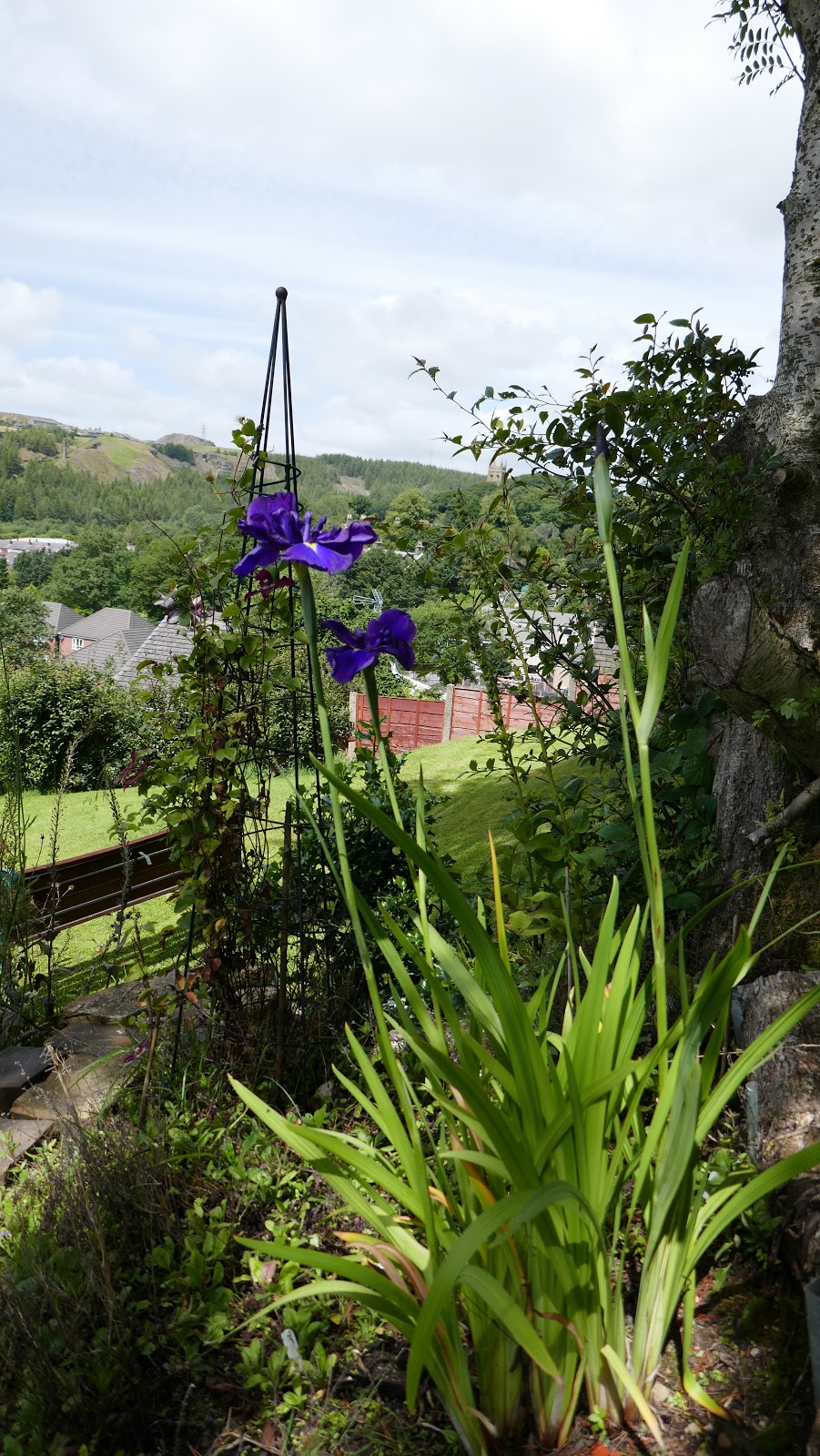
Having had some trouble with the iris Germanica with its changing colour, I am chuffed that my new iris has produced some stunning blooms. Iris Ensata "crystal halo" is really a bog iris and as such should not really be growing on the sloping bed on the north side of the garden. I had intended to put it by the lower pond but in practice the space I had envisaged was just not quite big enough. So I have deviated from the adage "right plant right place" and put it here. However, to get it to grow successfully I did plant it in a good sized hole that was lined with an old compost sack to create an artificially ill drained spot in the border. It proves that with some ingenuity a lot more is possible than the text books might have us believe.
Top tip: never be afraid to try something different, a gardener will have many failures even if everything is done by the book so taking a chance with something less orthodox adds a little spice and intrigue.
Labels:
top tip
Monday, 27 July 2020
The Pastel Bed
It struck me recently how much a garden will evolve without any help from the people who might tend it. I was weeding in and around the pastel bed and realized how it was losing some of its intended lighter shades of colour. This year the gaura "Sparkle White" has yet to show, the lavatera "Barnsley Baby"is well behind and the gypsophila did not survive the winter, meaning the predominant colours are shades of purple and blue.
The achillea cassis, the eryngium, alliums and the astilbe do a good job but it is not quite how it looked last year. I suspect the achillea (yarrow) is out competing some of the other plants so I will be careful to gently redress the balance in the future.
However, I will still enjoy the display and be thankful that the astilbe is the white variety (quite appropriate as its English name is the evocative "false goat's beard"

Elsewhere in the garden the evolution is more orderly and the beds around the new cherry tree are filling out nicely. Hopefully they will do well into the autumn when they can die back gracefully to leave the bronze bark to illuminate the quiet late autumn and winter .
Top tip: at the design stage, think how a border will look throughout the year and consider what will give a succession of seasonal interest. Small shrubs are often the most straight forward way of achieving this, they can have form to provide structure, many are evergreen to provide some hint of life and others have the most beautiful stems, such as the dogwood which has a multitude of colours depending on your chosen variety.
The achillea cassis, the eryngium, alliums and the astilbe do a good job but it is not quite how it looked last year. I suspect the achillea (yarrow) is out competing some of the other plants so I will be careful to gently redress the balance in the future.
However, I will still enjoy the display and be thankful that the astilbe is the white variety (quite appropriate as its English name is the evocative "false goat's beard"
Elsewhere in the garden the evolution is more orderly and the beds around the new cherry tree are filling out nicely. Hopefully they will do well into the autumn when they can die back gracefully to leave the bronze bark to illuminate the quiet late autumn and winter .
Top tip: at the design stage, think how a border will look throughout the year and consider what will give a succession of seasonal interest. Small shrubs are often the most straight forward way of achieving this, they can have form to provide structure, many are evergreen to provide some hint of life and others have the most beautiful stems, such as the dogwood which has a multitude of colours depending on your chosen variety.
Thursday, 16 July 2020
Summer time and the Livin' is Easy
Although the longest day is now behind us, we are now at the mid point of summer meteorologically speaking. The garden is filling out in its seasonal finery, although it would look a little better if we had some sunshine.

Mili and Hecate are getting outside when it isn't raining but patrolling and marking out their territory seems be a very low priority.
By contrast the blackbirds have been exceptionally busy feeding their young. They are nesting in the ivy and conifer hedge at the side of the house. It is positively exhausting watching how busy they are going back and forth with provisions for their young. Pictured below is the female blackbird with a mouth full of goodies for taking back to the nest.
My approach to the garden is distinctly leisurely by comparison to the no stop activity of the blackbirds. Perhaps I should be a little more forgiving of Mili and Hecate for taking things real easy..... George Gershwin had it about right.
Labels:
Hecate,
Mili,
philosophy,
wildlife
Subscribe to:
Posts (Atom)