Sunday, 31 May 2020

Aquilegia

The aquilegia or columbine is one of my favourite flowers. It is probably because it is not too fussy where it is planted and will thrive in a wide variety of situations. Consequently, it does well in the Pennine garden and they even grow in the meagre soil by the side of the large Scots Pine and close by the Solomon's Seal. The aquilegia also come in a huge variety of colours, as the photos below illustrate, all of which were taken in the past few days.
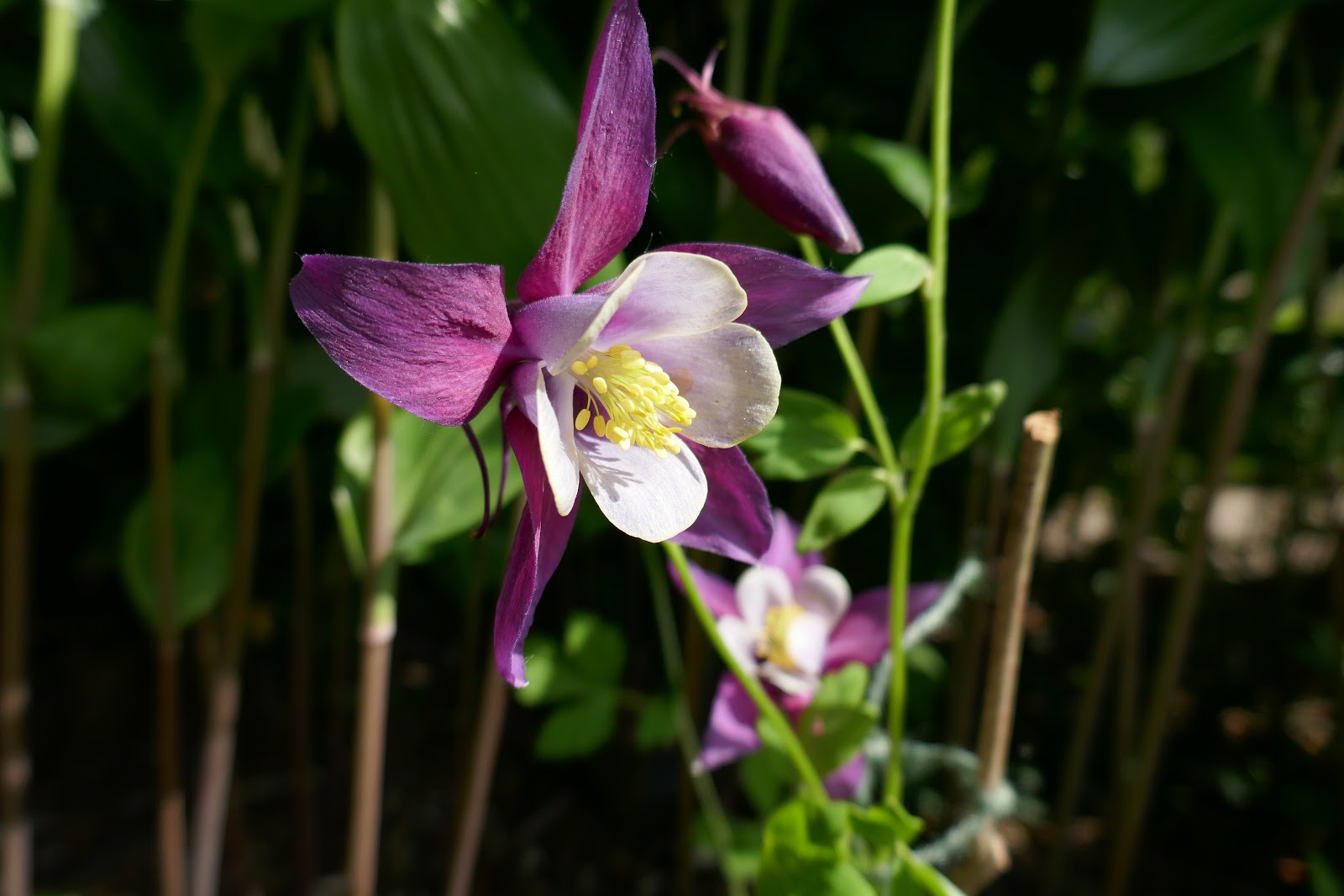


The aquilegia tends to be prolific at self seeding and can be relied upon to come back each year. It is another very good reason to find a home in your garden for some of these pretty and distinctive little plants. Although if you prefer tighter control of your borders you can remove the seed heads. Top tip: if you have a problem patch in your garden but want a lovely splash of late spring colour then give the aquilegia a try.

The folklore associated with the columbine flower is plentiful and it is often said to represent a symbol of love and romance. The meaning behind this flower means that it is supposedly an ideal gift when you want to surprise someone who is your love or your partner. The columbine flower is going to send a strong message of love and affection, no matter how small or unimportant it might seem. Those who understand the columbine flower symbolism are going to be more than happy to receive such a beautiful gift.

However, in some cultures, the columbine flower represents foolishness and the court jester. The reason why it is linked with this this characteristic or person is probably because of the appearance of the flower itself. This flower is shaped like the jester’s hat and this is one of the reasons behind this interesting connection.

Friday, 22 May 2020

Spring is Yellow

This week I noticed how many of the spring plants in the Pennine garden are yellow. I am not referring to the iconic daffodils which have now been and gone but to a selection of quite different plants, from trees, through shrubs and down to weeds.

The colour yellow represents, happiness, clarity and sunlight. It isn't surprising that yellow symbolizes these positive characteristics given the appearance of the yellow sun and its effects. In ancient cultures where a god or gods were associated with the sun, such as Egypt and China, yellow was the highest and noblest of colours and thus, the colour of religious figures and royals (who were thought to be descendants of the gods). All colours have a flipside, a degraded meaning that traditionally opposed the positive one. Along with warmth and happiness, then, yellow also represents cowardliness and deceit.

However, this does not deter me from choosing the laburnum tree as my plant of the month. It is a beautiful tree which will barely grow above 10 metres and with a narrow trunk fits perfectly into the space at the top of the garden. Its compact size make it an deal choice for many domestic gardens, top tip review your plot and see if you have a little space for one of these lovely little trees. The drooping vivid yellow flower racemes make it a sight to behold in the spring. Just one word of caution it is poisonous if any part of the tree is ingested.


The proximity of the flowers to the deep purple of the berberis thunbergii make a fabulous contrast of colour. 

Also in bloom at the moment is the broom. Similar in appearance to gorse but without the spines it is a very easy to grow shrub. It is at the back of one of the borders and looks at it best with a blue sky behind it.


Finally, a yellow splash of colour that inveigles itself into all the little nooks and crannies in the garden is the Welsh poppy (meconopsis cambrica). Most definitely not a favourite as this little weed tends to get everywhere but there is no denying that it does have a certain beauty.


Monday, 18 May 2020

Frugal Gardening part 2

Growing from seed is one of the most rewarding parts of gardening. Irrespective of the size of the area that you have to work with there is always likely to be some space for a seed tray, or recycled butter carton or tinfoil tray on a sunny window sill. While most seeds will already have been sown there are still quite a few annuals that can be bought and sown even in mid May. While most of these will be veg and salad crops, you can still sow many varieties of tomatoes and of course, one of my favourites some ornamental grasses. Collecting your own seed then sowing at the appropriate time must be the most rewarding and the most cost efficient method of gardening that there can possible be.

Consequently, my top tip is keep sowing and get yourself prepared for collecting seeds and carefully storing them in a cool, dry tin. I know that some of the Elijah Blue grass is not far from setting seed already.

The other money saving job that will be worth doing in the next few weeks will be digging up the spent daffodils and, a little later, the tulip bubs. Wait until the foliage dies down completely,then any that are not left in the soil can be carefully dug up and stored in a paper bag. I plant new fresh bulbs each year but also save the previous years bulbs and even though they will be somewhat less reliable plant them out in less visited parts of the garden.

A less visited corner can be made much brighter with last years bulbs

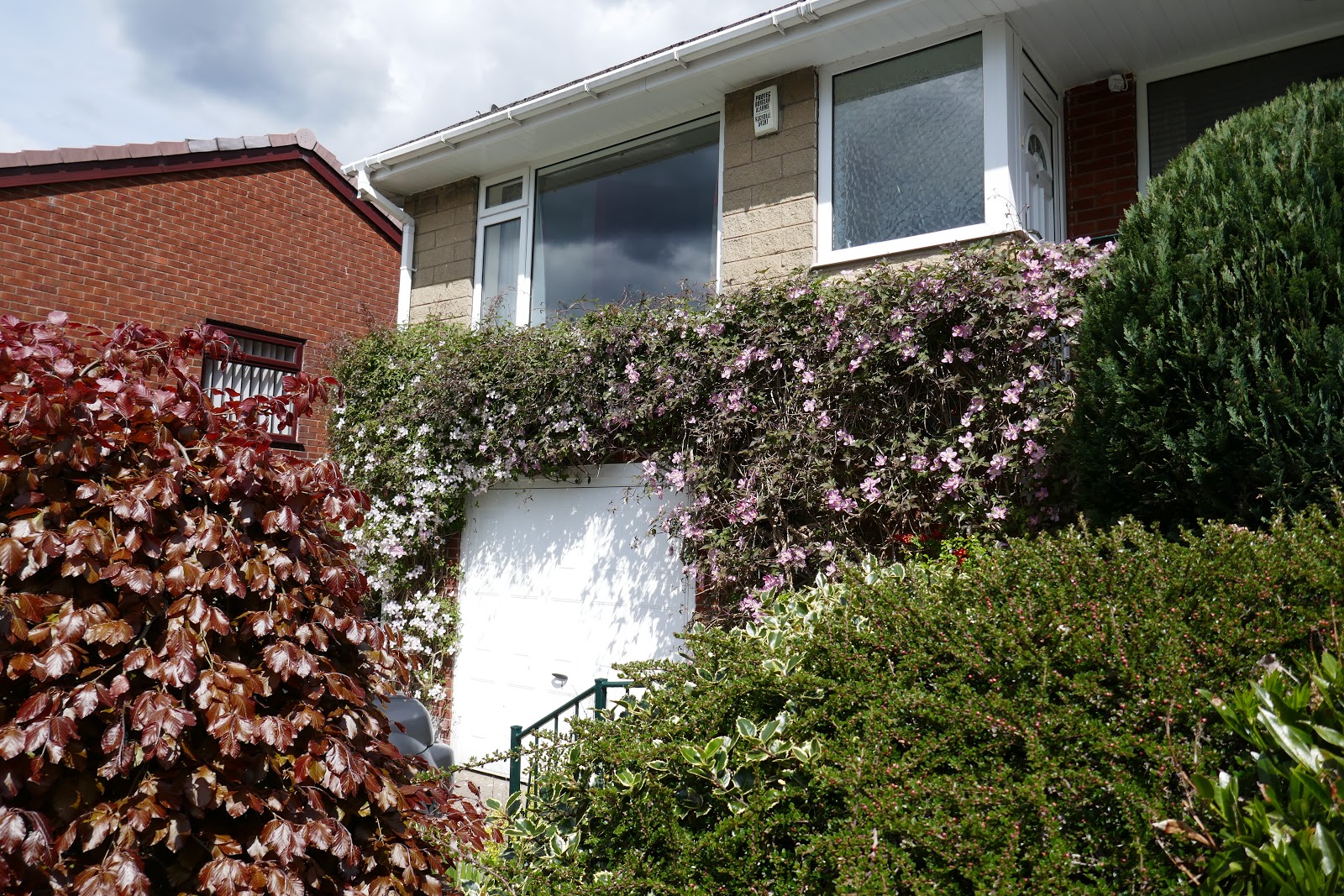
The clematis that covers the front of the house has done very well again this year. It is a pity is doesn't last a few weeks longer but when in flower it certainly attracts some admiring glances.


Friday, 8 May 2020

Gardening meets golf.

Today is my birthday. I have spent most of the daylight hours relaxing in the garden doing little other than watering the plants. Earlier in the day a very dear friend dropped off a gift, a book on the best links golf courses in the British Isles. I have spent a good few hours perusing the tome and one particular section struck a chord. You might say it described perfectly how my passion for golf meets my enthusiasm for gardening.

To paraphrase the author, Donald Steel, in links golf you cannot play the shot you want, instead you play the shot you can.

For the non golfing reader, this means that the game of golf, when played on the seaside links courses, presents challenges that courses in other locations infrequently do. They test the golfer's decision making, they test his patience and they thoroughly examine his shot making ability.

The parallel with gardening is found when you recall the old adage, mentioned in this blog more than once before, "the right plant for the right place".

The challenge of gardening will always be, do not to simply plant the plant you want but instead plant the plant you can.

However, as much as I like to think that this is a basic principle which I adhere to, sadly it is not always the case. I still persist in struggling to grow some Japanese blood grass in front of the massed pony tail grasses. I have replaced the plants numerous times and take little comfort in the experience of others who tell me how tricky blood grass can be to grow. Conversely, the ideal plant for my acidic heavy clays would be rhododendrons. But I only like to grow a few, mostly at the front of the house. I always associate the rhododendrons with the mass invasion found in Killarney Ireland (especially noticeable across the lakes form the golf course!)

I am sure we all have the desire to grow selected unsuitable favourites, I suppose the lesson must be do not give in to temptation. But where is the fun in that!

The monochrome terrace has seen good use today

Saturday, 25 April 2020

Badgers after Dark

The wildlife has always been an essential and integral part of our outdoor space. It might cause a few headaches but the thoughts of being able to share and coexist with minimal (or modest) mutual disruption is a very pleasant thought. Watching the wildlife is a challenge, as a lot of the activity is nocturnal.

On occasions we can get a peep into the badgers world from the bedroom window which overlooks the lower pond. These video images were taken a few weeks ago.


However, I have been intrigued to learn a little bit more about the garden at night so I have invested in a basic night time camera trap. The first results are quite encouraging. These images were taken around the back of the shed, directly outside the entrance to the set.


And the next morning the night time activities seemed to be of interest to more than just the human residents. A curious Hecate has a good sniff around!


Hoping for a Bright Tomorrow.


I could not resist  a brief entry to highlight this snap taken yesterday before the sun finally set on the Pennines. It seemed quite fitting in these dreadful times of global pandemic that we try to keep a sense of perspective. A beautiful sight and a reminder that .......every sunset brings the promise of a new dawn.
Ralph Waldo Emerson, philosopher and poet

Let us all hope that the new dawn is not too long off. The gorgeous sky is simply a product of the sun being low on the horizon, meaning sunlight passes through more air than during the day, when the sun is higher in the sky. More atmosphere for the light to pass through, means more molecules to scatter the violet and blue light away from your eyes.This is why sunsets are often yellow, orange, and red. 

A moment to enjoy but also to look forward with some positivity and to appreciate that nature is transient and, no matter what, seasons like pandemics will all pass with time.

Sunsets, like childhood, are viewed with wonder not just because they are beautiful but because they are fleeting.
Richard Paul Evans' US author


Thursday, 23 April 2020

Bringing the outside in and taking the inside out!

Agapanthus needs to be acclimatized
This is the time of the year when the plants in the conservatory have to be taken outside on a daily basis for hardening off. When dusk approaches they are brought back inside. I keep an eye on the Met Office weather forecasts and if it is likely to be a mild night then the plants may be left outside. But more often than not they are brought back into the safety of the conservatory.

The conservatory is also a space for relaxing and by the beginning of May the notion of bringing the outside in becomes more important. This essentially involves trying to make a natural transition between the greenery of the conservatory house plants and the vegetation of the patio and pond.


Inside meets outside
Lilium Queen of the Night
 
It is now rather dated to want a neat border between home and garden, apparently the latest dreadful buzzword in home design is “transterior” – where there’s an utterly seamless segue from one to the other.

The ideal is a much more symbiotic outcome, where buildings are more sympathetic to the landscape outside, and vice versa. Twenty years ago, the must have was the ‘outdoor room’. Today the indoor and outdoor are being designed merge, with elements of greenery joining the spaces with more natural materials  inside, and the architecture flowing outside.

Top tip: while most of us cannot easily redesign the architecture of our homes, we can bring the outside in with the judicial placement of seasonal pots by the front, back and conservatory doors. A simple illusion of bringing the garden closer to the indoors. Combined with a plant pot on the windowsill enables the "bringing of the outside in and the inside out."