Elsewhere on the terrace the roses are now looking their best. It is a little bit of a pity that the rain, wind and hail has given them a little bit of a battering. The Alba Semi Plena (White Rose of York) is doing particularly well and my dear wife tells me that the fragrance is just divine. I will take her word for that, I am simply chuffed that this year the blackspot is quite minimal and the aphids seem to have been discouraged by the harsh meteorological conditions.
Top tip: do not stress too much about your roses. It is often just a matter of chance whether or not they avoid infestations but being vigilant can minimize any negative consequences. Simply rub off aphids when they appear and remove diseased leaves with clean secateurs.
Sunday, 21 June 2020
Sun Terrace Update
Labels:
roses,
sun terrace
Friday, 19 June 2020
Quite a Mystery
I must confess to being somewhat baffled by the mystery concerning my irises. In a nutshell they have changed colour since last year, they have morphed from a vibrant purple into a rather subdued pink. The photographs below show the same plant but with 12 months time lapse. If anyone can explain why this might have happened I would be very interested.
The image on the left was taken last year and on the right a few days ago!

The image on the left was taken last year and on the right a few days ago!

Rain Does Not Stop Play
The weather might be a lot less summery than could be expected, despite the hastening approach of the longest day. But this does not stop the work that needs to be done.
The badgers are busy with their nocturnal foraging and Mili is keen to keep up with her early, misty morning patrols.
Friday, 5 June 2020
Not Exactly Wildlife in the Garden
It has bee some months since a post was dedicated to the two felines who share the garden. Both Mili and Hecate have been enjoying the nice early summer weather, at least until the winds and rain of today. Mili rather likes to help with the gardening (or getting under the feet) while Hecate is more of a sun worshipper and an inspector of works once the jobs have been finished.
Below are a few images taken towards the end of the day. Perhaps the two cats have a sense when I am about to rest for ten minutes or perhaps they are presuming that it is time to come inside for supper. Of course, I do need reminding about suppertime every night!
| Hecate being rather more purposeful than usual |
| Mili ready to help! |
Sunday, 31 May 2020
Aquilegia
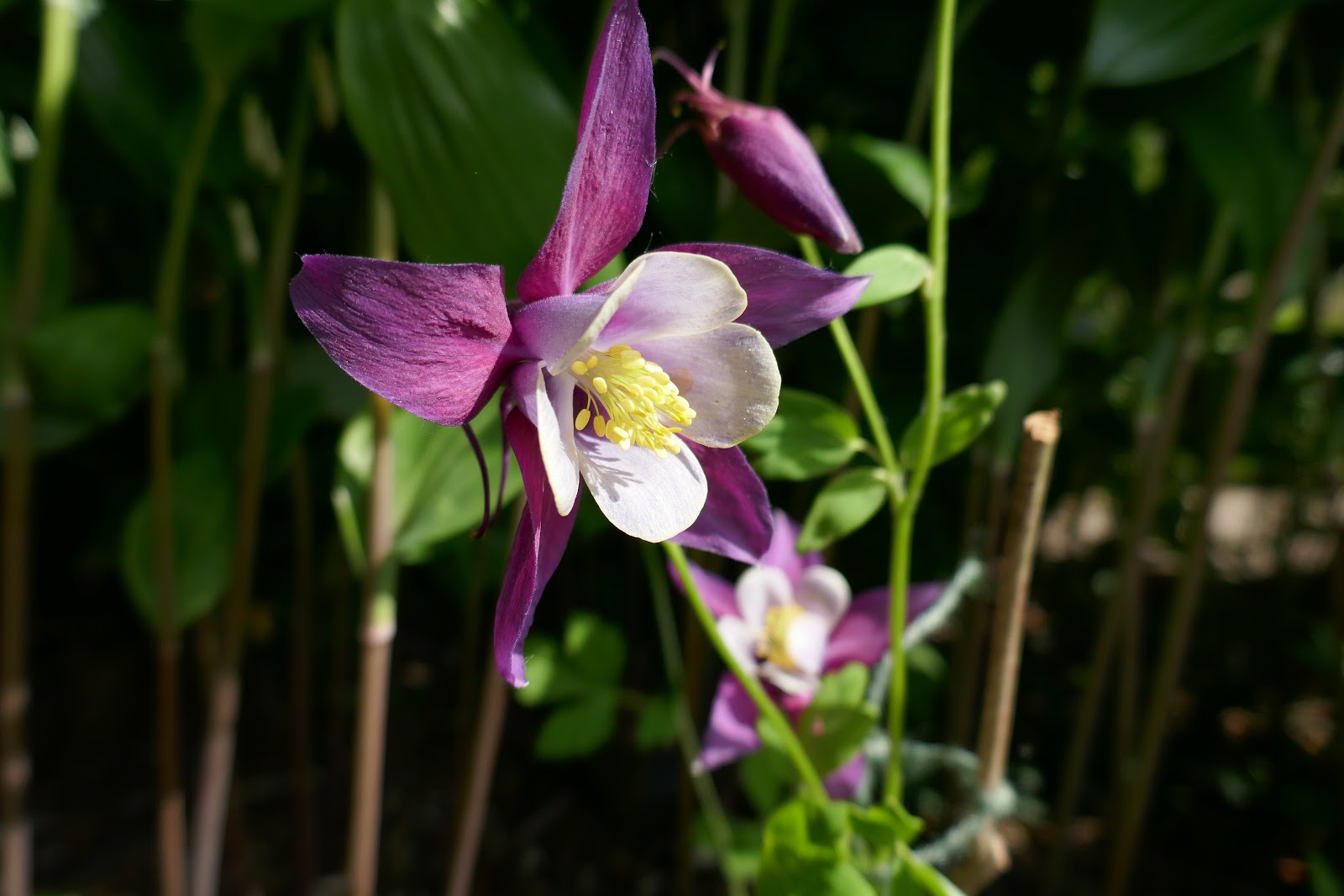
The aquilegia tends to be prolific at self seeding and can be relied upon to come back each year. It is another very good reason to find a home in your garden for some of these pretty and distinctive little plants. Although if you prefer tighter control of your borders you can remove the seed heads. Top tip: if you have a problem patch in your garden but want a lovely splash of late spring colour then give the aquilegia a try.
The folklore associated with the columbine flower is plentiful and it is often said to represent a symbol of love and romance. The meaning behind this flower means that it is supposedly an ideal gift when you want to surprise someone who is your love or your partner. The columbine flower is going to send a strong message of love and affection, no matter how small or unimportant it might seem. Those who understand the columbine flower symbolism are going to be more than happy to receive such a beautiful gift.
However, in some cultures, the columbine flower represents foolishness and the court jester. The reason why it is linked with this this characteristic or person is probably because of the appearance of the flower itself. This flower is shaped like the jester’s hat and this is one of the reasons behind this interesting connection.
Labels:
top tip
Friday, 22 May 2020
Spring is Yellow
This week I noticed how many of the spring plants in the Pennine garden are yellow. I am not referring to the iconic daffodils which have now been and gone but to a selection of quite different plants, from trees, through shrubs and down to weeds.
The colour yellow represents, happiness, clarity and sunlight. It isn't surprising that yellow symbolizes these positive characteristics given the appearance of the yellow sun and its effects. In ancient cultures where a god or gods were associated with the sun, such as Egypt and China, yellow was the highest and noblest of colours and thus, the colour of religious figures and royals (who were thought to be descendants of the gods). All colours have a flipside, a degraded meaning that traditionally opposed the positive one. Along with warmth and happiness, then, yellow also represents cowardliness and deceit.
However, this does not deter me from choosing the laburnum tree as my plant of the month. It is a beautiful tree which will barely grow above 10 metres and with a narrow trunk fits perfectly into the space at the top of the garden. Its compact size make it an deal choice for many domestic gardens, top tip review your plot and see if you have a little space for one of these lovely little trees. The drooping vivid yellow flower racemes make it a sight to behold in the spring. Just one word of caution it is poisonous if any part of the tree is ingested.

Finally, a yellow splash of colour that inveigles itself into all the little nooks and crannies in the garden is the Welsh poppy (meconopsis cambrica). Most definitely not a favourite as this little weed tends to get everywhere but there is no denying that it does have a certain beauty.
The colour yellow represents, happiness, clarity and sunlight. It isn't surprising that yellow symbolizes these positive characteristics given the appearance of the yellow sun and its effects. In ancient cultures where a god or gods were associated with the sun, such as Egypt and China, yellow was the highest and noblest of colours and thus, the colour of religious figures and royals (who were thought to be descendants of the gods). All colours have a flipside, a degraded meaning that traditionally opposed the positive one. Along with warmth and happiness, then, yellow also represents cowardliness and deceit.
However, this does not deter me from choosing the laburnum tree as my plant of the month. It is a beautiful tree which will barely grow above 10 metres and with a narrow trunk fits perfectly into the space at the top of the garden. Its compact size make it an deal choice for many domestic gardens, top tip review your plot and see if you have a little space for one of these lovely little trees. The drooping vivid yellow flower racemes make it a sight to behold in the spring. Just one word of caution it is poisonous if any part of the tree is ingested.
The proximity of the flowers to the deep purple of the berberis thunbergii make a fabulous contrast of colour.
Also in bloom at the moment is the broom. Similar in appearance to gorse but without the spines it is a very easy to grow shrub. It is at the back of one of the borders and looks at it best with a blue sky behind it.
Finally, a yellow splash of colour that inveigles itself into all the little nooks and crannies in the garden is the Welsh poppy (meconopsis cambrica). Most definitely not a favourite as this little weed tends to get everywhere but there is no denying that it does have a certain beauty.
Labels:
plant of the month,
top tip
Monday, 18 May 2020
Frugal Gardening part 2
Growing from seed is one of the most rewarding parts of gardening. Irrespective of the size of the area that you have to work with there is always likely to be some space for a seed tray, or recycled butter carton or tinfoil tray on a sunny window sill. While most seeds will already have been sown there are still quite a few annuals that can be bought and sown even in mid May. While most of these will be veg and salad crops, you can still sow many varieties of tomatoes and of course, one of my favourites some ornamental grasses. Collecting your own seed then sowing at the appropriate time must be the most rewarding and the most cost efficient method of gardening that there can possible be.
Consequently, my top tip is keep sowing and get yourself prepared for collecting seeds and carefully storing them in a cool, dry tin. I know that some of the Elijah Blue grass is not far from setting seed already.
The other money saving job that will be worth doing in the next few weeks will be digging up the spent daffodils and, a little later, the tulip bubs. Wait until the foliage dies down completely,then any that are not left in the soil can be carefully dug up and stored in a paper bag. I plant new fresh bulbs each year but also save the previous years bulbs and even though they will be somewhat less reliable plant them out in less visited parts of the garden.
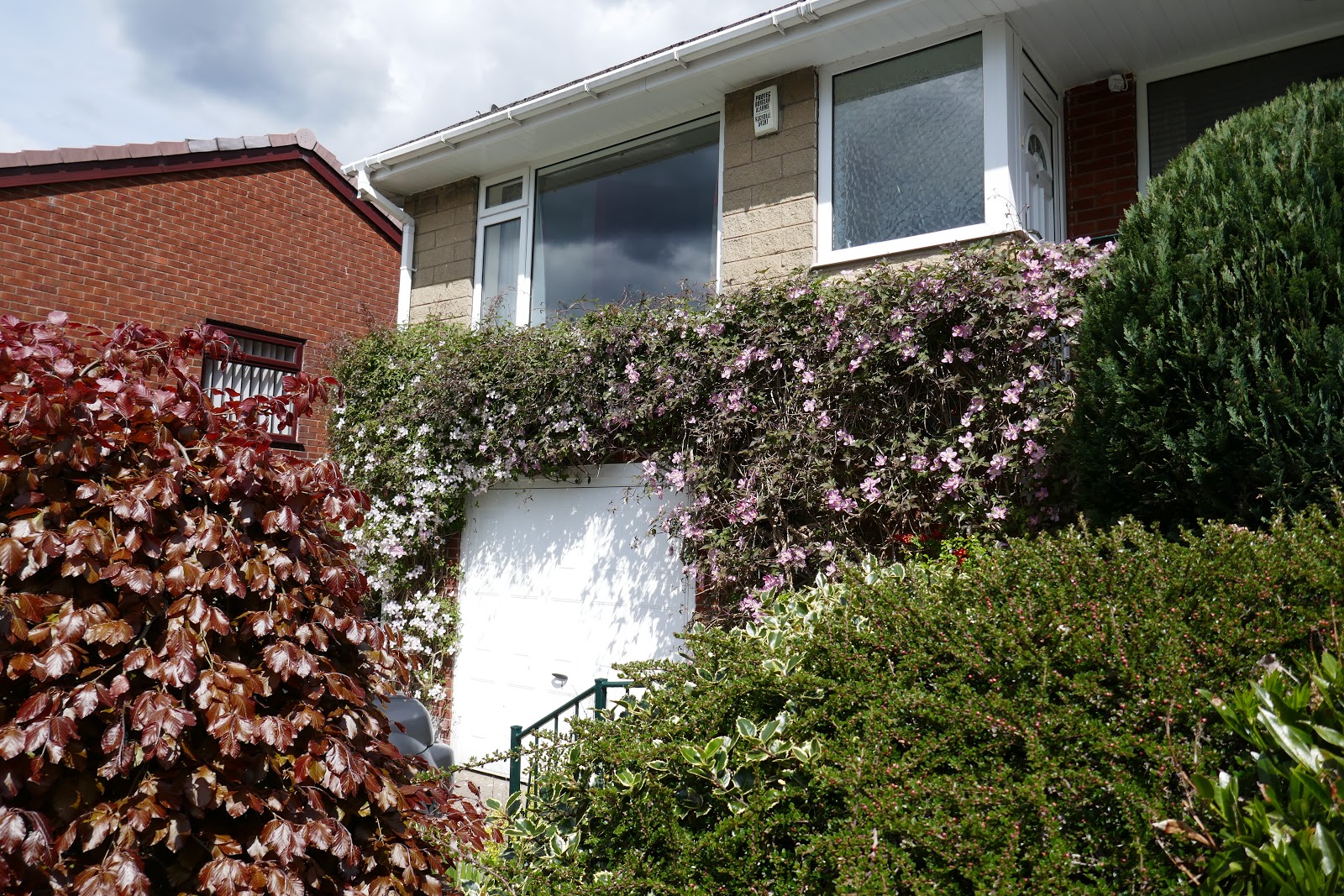
The clematis that covers the front of the house has done very well again this year. It is a pity is doesn't last a few weeks longer but when in flower it certainly attracts some admiring glances.
Consequently, my top tip is keep sowing and get yourself prepared for collecting seeds and carefully storing them in a cool, dry tin. I know that some of the Elijah Blue grass is not far from setting seed already.
The other money saving job that will be worth doing in the next few weeks will be digging up the spent daffodils and, a little later, the tulip bubs. Wait until the foliage dies down completely,then any that are not left in the soil can be carefully dug up and stored in a paper bag. I plant new fresh bulbs each year but also save the previous years bulbs and even though they will be somewhat less reliable plant them out in less visited parts of the garden.
| A less visited corner can be made much brighter with last years bulbs |
The clematis that covers the front of the house has done very well again this year. It is a pity is doesn't last a few weeks longer but when in flower it certainly attracts some admiring glances.
Labels:
front garden,
Hecate,
spring bulbs,
top tip
Subscribe to:
Posts (Atom)